

Home
Centrum voor Proefdiervrij Biomedische Translatie (CPBT)
Animal free biomedical translation for generating safer and more effective treatments.
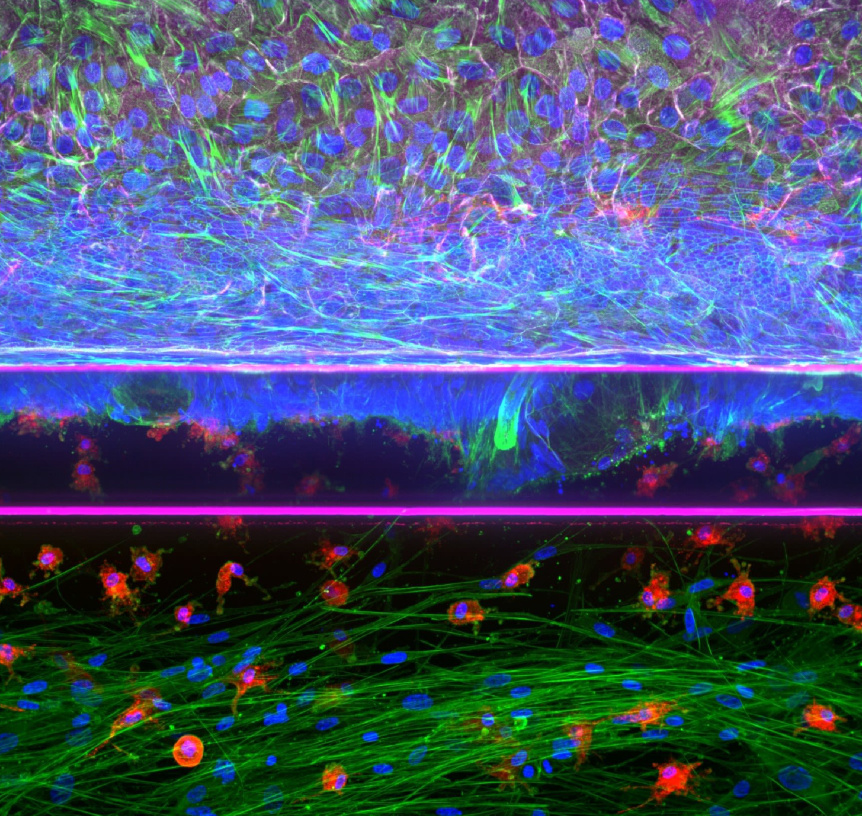

The Centre for Animal-Free Biomedical Translation (CPBT, in Dutch: Centrum voor Proefdiervrije Biomedische Translatie) aims to become the national centre for valorizing and disseminating animal-free innovations and expertise. It aims to improve and accelerate the transition of new biomedical innovations to patients and users, at lower costs, and without the use of animals. This will lead to safer, more effective, and better medicines while reducing animal testing.

10 years
Initial duration

245 million
Budget

60+
Partners





About the CPBT
The translation of biomedical knowledge to patients and users results in new medicines, medical technologies, and food products. This benefits our health, our environment, and economy. Animal testing is currently an important link in the biomedical development process, but it is increasingly under pressure. Often, animal tests are not a good model for human application; they are time-consuming, expensive, and cause animal suffering. To continue improving the health of humans and animals, a radically different approach is needed: making the step to humans and animals faster and more effective, without relying on animal testing by default.
The CPBT will shape this approach, creating new business opportunities around animal-free technologies and biomedical translation. This allows the Netherlands to distinguish itself globally and realize its ambition of becoming a leader in animal-free innovation.
Together with many national and international partners, the CPBT works on the development and dissemination of animal-free biomedical innovations and expertise. The initial transition projects focus on ALS, cystic fibrosis, osteoarthritis/rheumatic diseases, and asthma/COPD. The CPBT implements the available and developed methods, tools, and expertise together with researchers and companies. The centre also offers education, training, advice, and support to enhance the acceptance and use of animal-free biomedical innovations. Combined, the CPBT runs an integrated program that accelerates the transition to animal-free testing and strengthens the Dutch economy.
The total budget available to the CPBT in the period from 2025 to 2034 is 245 million euros. 124.5 million of this budget is an investment from the Dutch National Growth Fund (NGF); the other funds are contributed by public and private CPBT partners.
Lygature’s role in the CPBT:
Lygature played an important role in setting up the necessary governance structure and consortium agreements. Lygature furthermore supports the CPBT with program management and communication activities.
- Program management: Lygature focuses on fostering mutual understanding between partners to ensure effective collaboration. Moreover, Lygature supports partners in their day-to-day operations, such as drafting of project plans, reporting and achieving milestones according to the defined timeframes.
- Communication: Lygature’s communication efforts for the CPBT concern the development and execution of a communications strategy targeting key stakeholders. Lygature is also responsible for developing communication tools such as a visual identity, website, newsletters and social media.
Lygature is proud to be partner of the CPBT, employing and expanding our expertise in managing complex public-private partnerships in the life sciences.
Lygature together with
3BrainAG, Allegro, ALS patiëntenvereniging, Amsterdam University Medical Center (AUMC), Amylyx, Aquilo, ArthroSave, Aryzon, AstraZeneca, Azar innovations, Chondropeptix, CHRN on-chip biotechnologies B.V, Citeq, Danone Nutricia Research, Eindhoven University of Technology (TU/e), Elevate Academy, Erasmus MC, ETB-bislife, EU JRC (EU Joint Research Centre, JRC), EU Reference Laboratory for alternatives to animal testing (JRC-ECVAM), FAIR Therapeutics, Genmab, GQ Bio Therapeutics, hDMT, hiPSC hotel LUMC, HIT CF Europe, HU University of Applied Sciences Utrecht, Hubrecht Instituut & KNAW, Humane Society International (HSI), InnoCore Pharmaceuticals, intoSURGERY, Johns Hopkins Center for Alternatives to Animal Testing (CAAT), Johns Hopkins University, Leiden University Medical Center (LUMC), Liposphere, Longfonds, Maastricht Universiteit (MU), Medicines Evaluation Board (CBG), Mimetas, Ministry of Agriculture, Fisheries, Food Security and Nature (LVVN, formerly LNV), National Institute for Public Health and the Environment (RIVM), NCFS, NeoVentures Biotechnology Europe, Netherlands Enterprise Agency (RVO), Netri, NLC, Nordic Bioscience, Optics11, Orthros Medical, Prinses Máxima Centrum, QurAlis, Radboud University (RU), Radboudumc, Recode Therapeutics, ReumaNederland, Roche, Sanofi, Stichting ALS Nederland, Stichting Lygature, Stichting Proefdiervrij, Synapticure, Tecan, TNO, Treeway, UMC Utrecht, Unilever, University Medical Center Groningen (UMCG), University of Groningen (RUG), Utrecht University, VectorY, Wageningen University & Research (WUR), ZEISS & Arivis, ZonMw