

Projects
European Lead Factory
A collaborative approach to finding high quality leads for new drug discovery programs

Latest project updates
The European Lead Factory was established in 2013 to find valuable lead structures that were previously inaccessible – and which might eventually generate novel treatment options for patients. It is a pan-European drug discovery project, and a flagship open innovation resource for academia, public organizations, large pharma companies and small- and medium-sized enterprises (SMEs).

185
new drug discovery projects

555,000
unique chemical compounds in the ELF library

About the European Lead Factory
Within the framework of the European Lead Factory, a Joint European Compound Library (JECL) has been created from two unique sources. First, over 300,000 compounds have been selected from previously inaccessible private company (EFPIA) collections. Second, a further 200,000 innovative compounds have been synthesized from crowd sourcing ideas by European Lead Factory chemistry partners. The initiative also offers ultra-high throughput (uHTS) screening of novel drug targets against the JECL at the European Screening Centre (ESC).
The new ESCulab project (European Screening Centre; Unique Library for Attractive Biology), supported by the Innovative Medicines Initiative (IMI), will use the well-established European Lead Factory brand in order to continue its success story of speeding up drug discovery.
Visit the European Lead Factory website for more information.
Sustaining consortium success as a trusted partner
The project reaches out to academics and SMEs throughout Europe. Lygature helped to drive development from the beginning, establishing and managing an international consortium of 20 (previously 30) partners. From January 2016, a broad range of resources and support are provided under the Lygature brand, including:
- Scientific management and leadership. Lygature is responsible for scientific management at the Program Office, where drug discovery proposals are being recruited and where the review and selection processes are coordinated. In addition, Lygature supports the Ethics Advisory Board and is coordinator of the IMI ESCulab grant;
- Trusted partner. As an independent enabler with no conflicting interests, Lygature guides public and private drug discovery;
- Sustainability. Lygature coordinates sustainability discussions and planning for the European Screening Centre and the collaborative drug discovery concept;
- Communications. Other contributions include brand building of EU Lead Factory; communicating and disseminating (scientific) articles, policies and guidelines; and use of our intranet platform for secured document sharing.
The European Lead Factory is an important example of the Lygature mission to bring academia, industry and society together in collaborative projects that allow participants to benefit from shared resources. It has required extensive expertise in both management and science, and has helped to build many long-term partnerships which Lygature continues to support.
Top image: Screening Robot at the European Screening Centre (courtesy of the Pivot Park Screening Centre)
Lygature together with



Acknowledgement of support
The research leading to these results has received support from the Innovative Medicines Initiative Joint Undertaking under grant agreement n' 115489, resources of which are composed of financial contribution from the European Union's Seventh Framework Programme (FP7 / 2007-2013) and EFPIA companies' in kind contribution.
This project has also received funding from the Innovative Medicines Initiative 2 Joint Undertaking (JU) under grant agreement No 806948: ‘ESCulab: European Screening Centre; Unique Library for Attractive Biology’. The JU receives support from the European Union’s Horizon 2020 research and innovation programme and EFPIA and Medicines for Malaria Venture (MMV).
Project updates
-
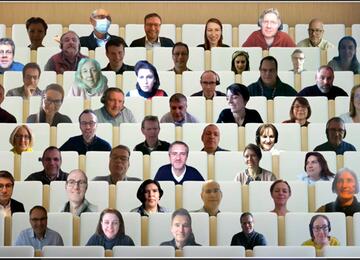
Embracing the new normal: The European Lead Factory kicks off monthly webinar series
On Thursday 12 November, the European Lead Factory (ELF) hosted the first in a series of webinars. With these webinars, the ELF team aims to engage and maintain contact with the broader scientific community, now that live conferences and in-person meetings are not possible. The team also hopes to lower the barrier for researchers who may be interested in collaborating with ELF to further their drug discovery ambitions.
This first webinar, which had more than 80 attendees, introduced participants to the ELF concept and how it contributes to European drug discovery and innovation. Jon de Vlieger, Coordinator of the ELF programme, and Volkhart Li, ELF Project Lead, gave an overview of the ELF portfolio and the progress made to date. Inspiring examples of ELF success stories in the fields of oncology, antimicrobial resistance, and neglected tropical diseases were also shared.
-

ELF project member spotlight: Jason Swedlow, University of Dundee
Phenotypic screening is a powerful approach to identifying novel chemical starting points for drug discovery, offering the potential to uncover new drug targets and pathways underpinning disease-related biology. High Content Screening (HCS) is one of the phenotypic screening approaches offered by the European Lead Factory (ELF). To find out more about HCS and all it entails, we spoke to Professor Jason Swedlow, head of the National Phenotypic Screening Centre (NPSC) at the University of Dundee – one of ELF’s academic partners.
-

ELF project member spotlight: Sabine Mulders, PPSC
One of the objectives of the European Lead Factory (ELF) is to provide guidance to the drug discovery community on successful strategies in lead discovery techniques. Helping to achieve this objective is the Pivot Park Screening Centre (PPSC), the ELF partner responsible for assay development and high-throughput screening. To find out more about what’s involved in the assay development process and the interactions with researchers, we spoke to Sabine Mulders, Chief Project Officer at PPSC.