

News
Combating poverty-related diseases: the benefits of a controlled human infection platform
Meta Roestenberg, physician-scientist at the Parasitology Department of Leiden University Medical Center (LUMC), talks about an innovative approach to testing vaccines and drugs for poverty-related diseases such as malaria.
Last November, healthy volunteers in the Netherlands were vaccinated against malaria in the world’s first ever efficacy trial of a vaccine candidate based on genetically weakened malaria parasites that was jointly developed by the Leiden University Medical Center (LUMC), Radboudumc in Nijmegen and the biotech company Sanaria. Testing candidate vaccine efficacy by vaccinating and subsequently infecting healthy individuals in a closely monitored ‘controlled human infection model’ can select the best candidates to go forward for costly and logistically difficult Phase-2 trials in countries where the disease is endemic.
Controlled human infection models for malaria, schistosomiasis and hookworm infections
It is five years since Meta Roestenberg finished her PhD fellowship at the Radboudumc on a controlled human malaria infection model as part of the TI Pharma (now Lygature) ‘Development of an Attenuated Parasite Vaccine for Malaria’ project. Ever since, the team has been pushing the genetically attenuated vaccine significantly closer to full clinical translation in collaboration with academic and industrial partners.
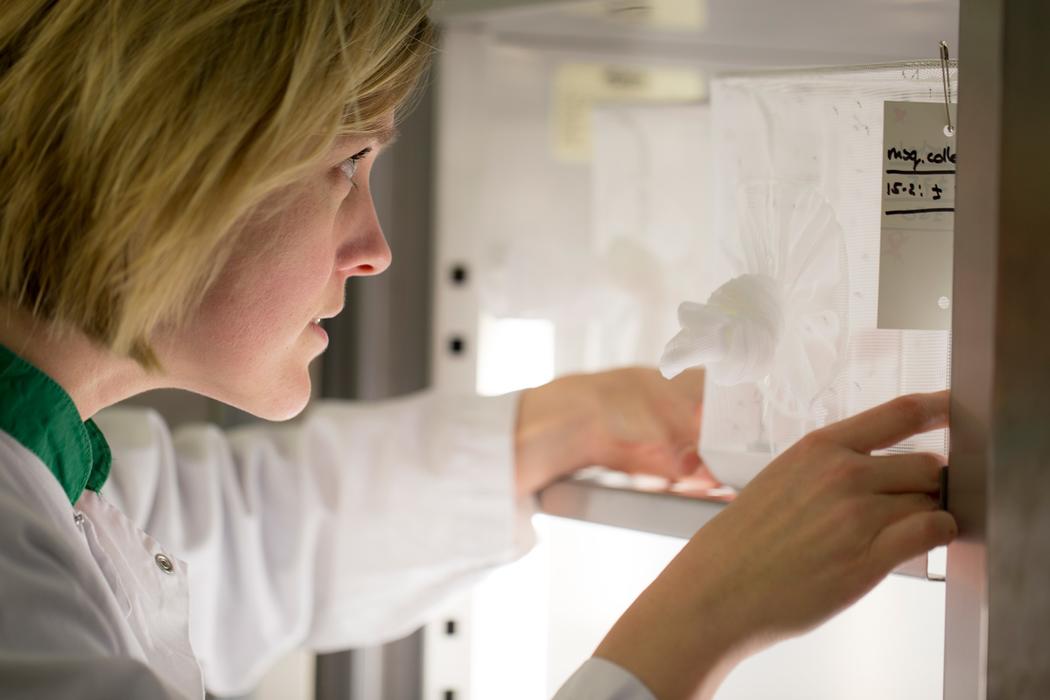
Meta Roestenberg, physician-scientist at Leiden University Medical Center
(Photo credit: Jantien Guldemond)
“The model provides us with the opportunity to evaluate vaccine and drug candidates for preliminary efficacy,” explains Meta, who is currently a physician-scientist in the department of Parasitology and Infectious Diseases of the LUMC. “Conducting Phase-2 clinical trials of vaccine or drug candidates for poverty-related diseases in endemic countries is very expensive and logistically challenging, and many candidates end up failing to show sufficient efficacy. A controlled human infection model offers the potential to significantly reduce the cost of these studies and the risk to patients, so that greater effort and resources can be focussed on the most promising drug and vaccine candidates.”
Meta is now broadening her work at the LUMC by applying her expertise in human malaria models to other areas. Over the past four years she has set-up a controlled human infection model for Hookworm infections, and she has developed and validated the world’s first controlled human infection platform for Schistosomiasis mansoni, (also known as Bilharzia). She is now actively looking for potential partners in further research, so she is keen to emphasize that “any interested researcher – from academia, charitable organizations or private companies – can approach us with potential projects to evaluate the efficacy of drug or vaccine candidates using our platforms.”
Economic advantage
Controlled human infection platforms are not only pivotal to the success of vaccine and drug development but also have sizeable economic advantages. However, the further development of these platforms remains challenging due to a lack of funding particularly in the area of poverty-related diseases.
“The better the model, the smaller the patient group required, and the more efficiently and cheaply a vaccine or drug candidate’s efficacy can be tested,” says Meta. “Especially in poverty-related disease research, where investment money is scarce, you want to gain insights into the efficacy of a vaccine or drug candidate as early as possible in the development process. In that way, the little money available can be invested in the most promising candidates. Increased knowledge on the efficacy of these candidates also decreases the risk for investors and increases the chance of follow-up funding.”
Promising vaccine candidate
Meta and her colleagues in Nijmegen and Leiden vaccinated the first human volunteers with a genetically modified malaria vaccine in November 2017. Following two further rounds of vaccination, the volunteers will be deliberately infected with malaria to test the vaccine’s efficacy.
“This is the first time any genetically modified vaccine against any parasitic disease has been tested in humans,” explains Meta. “These are complicated studies, so in addition to solid clinical protocols to control and safeguard the health of the volunteers, you also need to consider the fact that you are introducing genetically modified organisms into the environment.”
Building bridges in the translation from lab to clinic
Meta is also keen to point out that the complexities associated with controlled human infection models cannot be faced alone. “This type of clinical study requires collaboration between a multitude of people with different backgrounds and specific areas of expertise,” she emphasizes. “As a university hospital, our added value lies in being able to conduct early clinical studies, with medical doctors directly on hand to ensure the safety of volunteers. In case of the malaria clinical trial, we were able to combine the specific expertise and technologies from both the Nijmegen and the Leiden academic centres and the biotech company Sanaria. Sanaria is the only company worldwide which has the capacity to produce these type of vaccines according to GMP guidelines. Or take, for example, our work on controlled human schistosomiasis infection, where we partnered with several departments at the LUMC to combine the parasitic expertise of a biologist to cultivate and isolate the schistosome cercariae for infection, and a recognized Qualified Person to inform us on the appropriate quality control guidelines.”
These examples highlight the importance of public-private collaboration, in which Meta emphasizes the contribution of parties such as the European Vaccine Initiative and Lygature to align stakeholders. “In the development of new medical innovations against poverty-related diseases, bringing partners together in order to stimulate collaboration and accelerate the development of drug and vaccine candidates is essential to translating laboratory results into benefits for the patient,” she says. Meta’s own motivation is clear. “From the very beginning of my PhD, I knew I wanted to act as a bridge between the lab and the clinic and truly bring medical innovations from bench to bedside”.