

News
GNA NOW symposium identifies priorities for advancing treatments for severe enteric infections
Experts from academia, industry and global health came together in Lisbon to explore how emerging scientific evidence, improved research tools and new approaches to clinical development can help address the urgent need for effective antibacterial treatments for severe enteric infections.
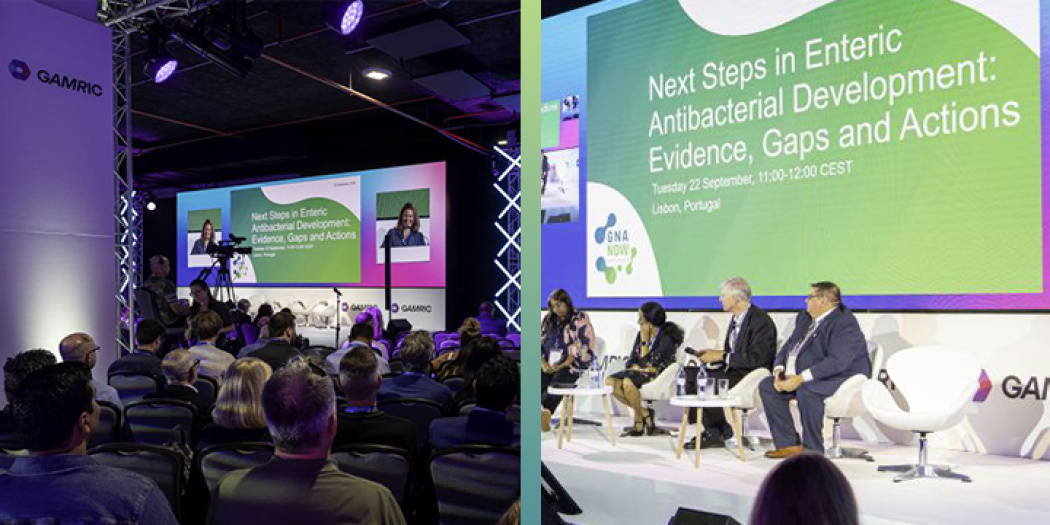
On 22 September 2026, the GNA NOW Consortium, coordinated by Lygature, hosted the symposium Next Steps in Enteric Antibacterial Development: Evidence, Gaps & Actions in Lisbon, Portugal, alongside GAMRIC 2026. Building on an earlier expert meeting held in Porto in 2024, the session brought together researchers and specialists in antibacterial development to examine recent scientific progress, remaining knowledge gaps, and priorities for future action. Together with a follow-up webinar held a week later, the symposium provided a fitting conclusion to GNA NOW, a public-private partnership that began in 2019 and officially ended on 30 September 2026.
Severe diarrhoeal infections continue to pose a significant health burden, particularly among young children in low- and middle-income countries. Growing resistance to commonly used antibiotics adds to the challenge, highlighting the need for new treatment options that are not only effective and safe, but also affordable and accessible.
Translating scientific evidence into better treatments
The symposium was officially opened by Kristina Orrling, GNA NOW coordinator at Lygature. It then began with two presentations highlighting important outcomes of GNA NOW’s research.
Alasdair MacGowan, Professor of Antimicrobial Therapeutics at the University of Bristol, presented the consortium’s work on a Target Product Profile (TPP) for antibacterial treatments for acute diarrhoeal infections in children.
Developed through an international collaborative effort, the TPP outlines the characteristics that future treatments should ideally meet, including antibacterial activity, appropriate formulations and dosing for children, safety, affordability and suitability for use in resource-limited settings.
The presentation also highlighted important challenges for future clinical development, from defining the target patient population to selecting appropriate comparators and ensuring equitable access to new treatments.
Shampa Das, Professor of Antimicrobial Therapeutics at the University of Liverpool, presented GNA NOW research investigating the relationship between in vitro (laboratory-based) and in vivo (animal-based) preclinical models of enteric infections.
Using the antibiotics ciprofloxacin and azithromycin, researchers explored how different models could help predict the relationship between antibiotic exposure and effectiveness against pathogens including E. coli, Salmonella and Shigella.
The findings showed encouraging correlations between laboratory and animal models, providing an initial foundation for improving how antibiotic doses are selected during preclinical development. Further research is needed to validate these relationships and better understand how they translate into clinical outcomes.
Together, the presentations demonstrated how GNA NOW’s research is helping to address scientific gaps that have historically complicated antibacterial development for enteric infections.
From research to action: what needs to happen next?
A panel discussion chaired by Richard Alm, Chief Scientific Officer at CARB-X, brought together the two presenters alongside Sumathi Nambiar (Johnson & Johnson), David Paterson (National University of Singapore) and Daniel Zurawski (Hartford HealthCare).
The discussion highlighted several priorities for advancing the field.
Designing clinical trials around the needs of children. Unlike many antibacterial development programmes, where treatments are first studied in adults, severe enteric infections disproportionately affect young children. The panel emphasised the importance of considering paediatric safety, formulations and trial requirements early in development. Innovative approaches, including platform trials capable of evaluating multiple treatments, were also discussed.
Strengthening the evidence needed for drug development. More reliable preclinical models and a better understanding of how antibiotic exposure relates to treatment outcomes are needed to inform dose selection and future clinical trials. The GNA NOW findings provide a starting point, while highlighting where additional research remains necessary.
Making access part of the development strategy. Developing an effective new antibiotic is only one part of addressing the unmet medical need. The panel stressed that affordability and access must be considered from the outset, particularly when clinical research takes place in countries where patients may otherwise struggle to obtain newly developed treatments.
Creating incentives for antibacterial innovation. The discussion explored how regulatory incentives, alternative development models and potential new uses for existing antibiotics could help stimulate research in an area where conventional commercial incentives remain limited.
Sharing research resources to accelerate progress. Daniel Zurawski described plans to incorporate the GNA NOW bacterial strain collection into the repository at Hartford HealthCare’s Center for Anti-infective Research and Development, with the aim of making these materials available to other researchers at minimal cost. This offers an opportunity for GNA NOW’s resources to continue supporting antibacterial research beyond the project.
Continuing the conversation with the wider AMR community
To extend the reach of the symposium, GNA NOW contributed to a follow-up webinar hosted by the AMR Accelerator on 30 September 2026.
The webinar revisited the scientific topics presented in Lisbon, offering researchers and other stakeholders unable to attend the in-person symposium an opportunity to learn more about the Target Product Profile and GNA NOW’s work on preclinical models for enteric infections.
After seven years of collaborative research, GNA NOW officially concluded on 30 September 2026. The symposium and follow-up webinar provided a fitting close to the project while looking ahead to the steps needed to advance effective and accessible treatments for severe enteric infections.
Through its scientific findings, research tools and shared expertise, GNA NOW leaves a foundation for continued collaboration and future antibacterial development.
Watch the GNA NOW symposium recording
View a selection of images
Watch the AMR Accelerator follow-up webinar
Acknowledgement of support
The GNA NOW project has received funding from the Innovative Medicines Initiative 2 Joint Undertaking (JU) under grant agreement No 853979: ‘GNA NOW: Gram-Negative Antibacterials NOW’. The JU receives support from the European Union’s Horizon 2020 research and innovation programme and is part of the AMR Accelerator.