

News
The importance of Diversity & Equality in successful partnerships
TopX, the platform for ambitious women in life sciences, recently organized the two-day summit “Towards a more gender-diverse top in Life Sciences & Health - From Ambition to Action". The event was packed with interesting talks and workshops from successful women with careers in both academia and industry.
Our colleague Kristina Orrling, Program Manager at Lygature, was invited for a panel discussion on how to build successful partnerships. Together with Liana Steeghs, Director of Alliances at Genmab and Nettie Buitelaar, owner of Buitelaar Biotech Business, she shared her vision on the key ingredients for successful partnerships.
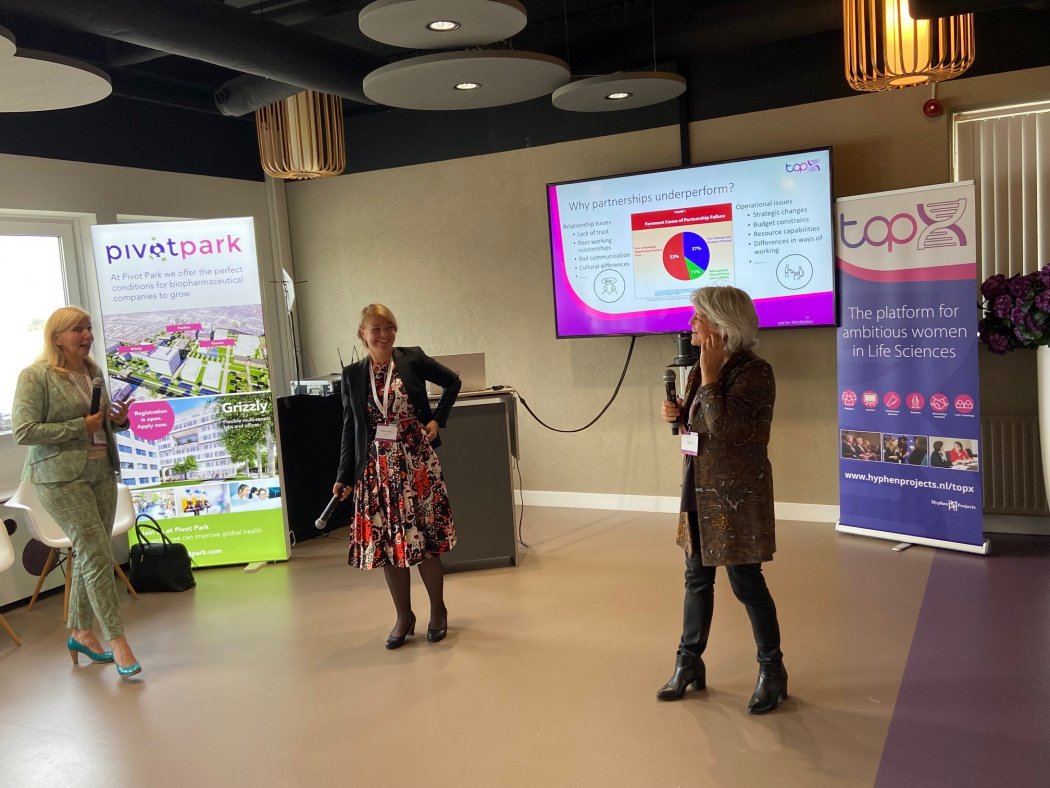
‘Why do partnerships sometimes underperform?’ Was an interesting question the panel discussed intensively. When a research consortium consists of a large number of public and private organisations, it can be a challenge to reach a joint goal since every organisation has its own interest. Relationship issues, lack of trust and unclear expectation management were mentioned as important factors that can hamper effective collaboration.
What is needed for success, then? According to Kristina, all partners need to be transparent why they want to embark on the project and have a clear view of its objectives. It’s important to define a challenging yet realistic concrete end-result at the start. From that you can devise a concise project plan, with clear timelines, a realistic budget, interim goals, and tasks per partner. In addition, Kristina talked about the importance of building trust within a partnership through structure and effective communication. Finally, a few common issues and how to address them were exemplified.
The discussion then focused on diversity, inclusion & equity in successful partnerships. Kristina says: “Organisations that actively support diversity and equality tend to make better business decisions. An inclusive and diverse environment allows more wider perspectives to be integrated when brainstorming, problem solving and developing new ideas in businesses. It typically enhances critical thinking, argumentation, analysis and collaboration. Improved gender equity improves equity for other demographic groups, like age, ethnicity, geographical and cultural background and sexuality. I have experienced first-hand that a raised awareness of unconscious biases improves group dynamics.”

Are you interested to connect with Kristina and learn more about how Lygature can support your partnership? Please reach out via kristina.orrling@lygature.org