News
The RADAR-AD consortium celebrates 4 years of research and achievements
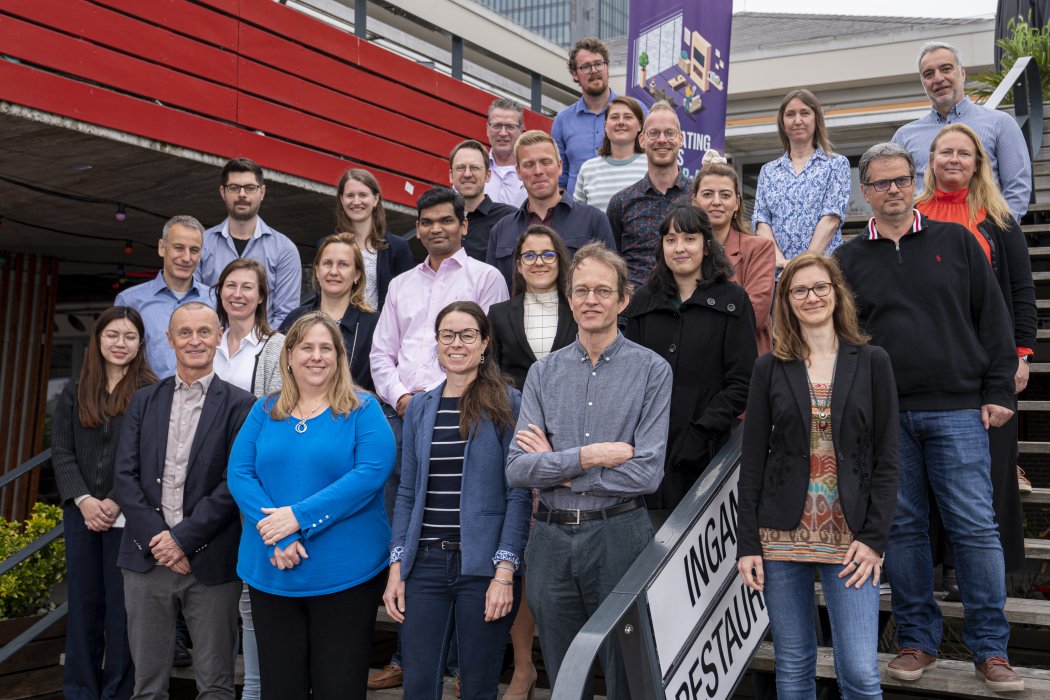
The final RADAR-AD meetings took place as hybrid events on the 15th and 16th of May in Amsterdam.
On the first day, RADAR-AD members gathered for a consortium meeting where investigators presented findings from their research and defined next steps for the analysis of data and the sustainability of project results. On the second day, the consortium was joined by members of the public and the RADAR-AD patient advisory board to discuss project results, experiences with patient involvement and the way forward.
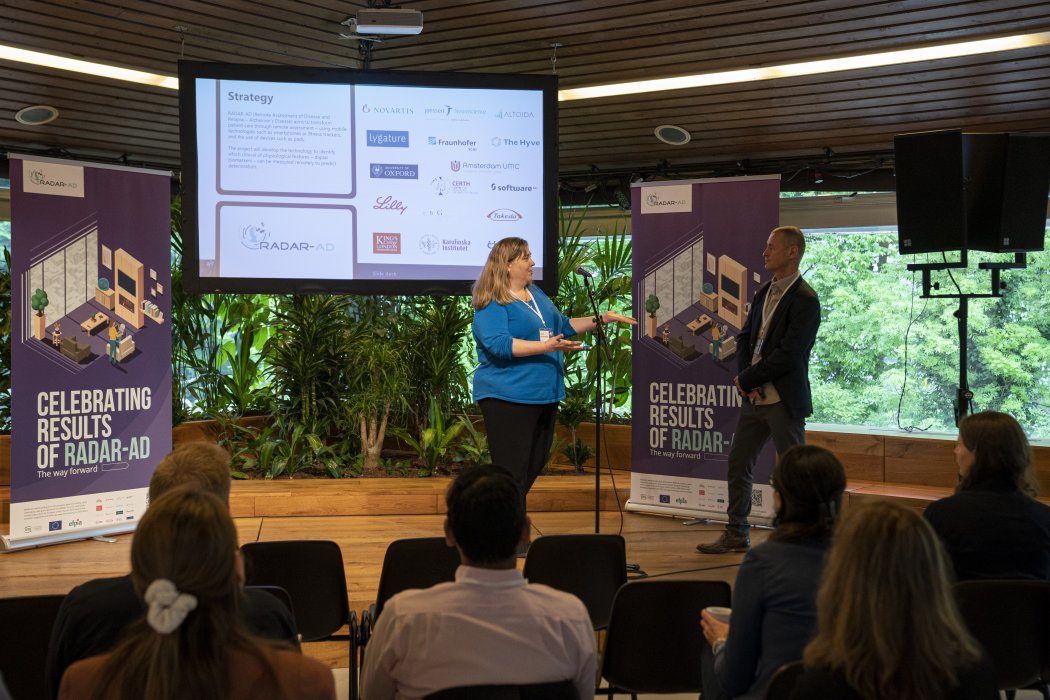
RADAR-AD leaders - Prof. Dag Aarsland (King’s College London) and Dr Gayle Wittenberg (Janssen Pharmaceutica NV), kicked off the first day of the meeting by reflecting on the initial goals and plans, their implementation, the outcomes of the study to date, and the ongoing analysis of the data collected from RADAR-AD’s clinical and smart home studies.
Accelerating the path to treatment
RADAR-AD’s industrial lead Dr Gayle Wittenberg (Janssen Pharmaceutica) said: “Alzheimer’s disease starts way earlier than the stage when symptoms are exhibited. There is a period of time in which you can identify the disease before symptoms start occurring. This is difficult to do and that is why we need more sensitive measures to help us improve this process. Also, how do you track if interventions are successful? We see the burden of dementia increasing over the last years. With RADAR-AD we hope to accelerate the path to treatment and the identification of Alzheimer’s earlier, thereby addressing this burden.”
RADAR-AD’s academic leader – Prof. Dag Aarsland (King’s College London), commented: “Digital biomarkers have a lot of potential. Nowadays, technology is abundant and mostly available to anyone in the developed world. Digital devices provide the opportunity to measure disease progression in a non-invasive way. This will contribute to solving the challenge that dementia poses on us. However, even though all these technologies are abundant and available, they are not sufficiently introduced in clinical practice and into Alzheimer’s clinical trials to provide better measurements. That is why, we formed the RADAR-AD consortium which gathers clinical experts, data scientists, industrial representatives and people living with Alzheimer’s disease with the goal to improve clinical trials, make them more cost-efficient and accurate, but also to support patients and carers in their homes, and ultimately – improve the quality of their lives.”
On the second day, the consortium was joined by members of the public and the RADAR-AD Patient Advisory Board (PAB) to discuss the research and outcomes of the project, as well as the way forward for the dissemination, sustainability and exploitation of RADAR-AD’s results.
RADAR-AD researchers presented their research and achievements so far, and their plans for the upcoming months before the end of the project in July 2023. They discussed RADAR-AD’s clinical studies, digital devices used and platform employed to gather data in RADAR-AD, as well as the functional domains and modelling work, and engagement with regulatory bodies.
The added value of patient involvement in research
Patient involvement has been a crucial component of RADAR-AD’s work since the outset of the project in 2019. Representatives from Alzheimer Europe presented their work on involving people with Mild Cognitive Impairment (MCI), people with dementia and carers/supporters in a Patient Advisory Board which has provided ongoing input to the RADAR-AD studies. More about the RADAR-AD PAB work is found here.
In the words of Dr Dianne Gove, Alzheimer Europe’s Director for Projects: “Public involvement is about actively involving members of the public (in this case people with MCI, people with dementia and carers/supporters) in research. It is about conducting research ‘with’ or ‘by’ members of the public, rather than ‘to’, ‘about’ or ‘for’ them. The goal is to ensure the implementation of their perspectives ‘from the inside’ and to consider their lived experience. This is knowledge that otherwise is missing. It helps to highlight issues and raise questions about matters that researchers might not have considered. Importantly, involving members of the public in research promotes transparency, accountability and legitimacy of such research projects. Above all - it ensures that people who are affected by research have the right to have a say in what and how publicly funded research is undertaken.”
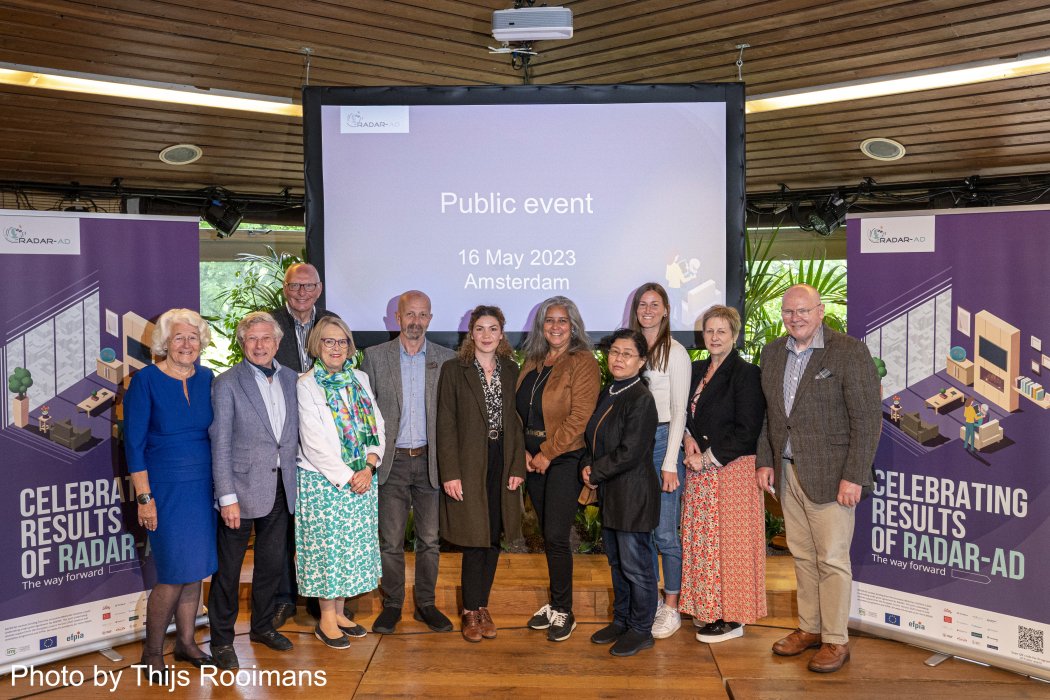
Helen Rochford-Brennan – member of the RADAR-AD PAB, who is living with Alzheimer’s dementia, spoke about her experience with the project: “Research into technology applied for the treatment of Alzheimer’s is crucial. I can attest to this importance, having being involved for over a decade with Alzheimer’s research. It has been an honour to be part of the RADAR-AD project. Actually, my life depends so much on technology – I often listen to music on Spotify, Alexa is my constant reminder for tasks and queries, my GPS helps me navigate my way. I call all of these ‘my psychosocial interventions’. I believe RADAR-AD’s technologies will revolutionize Alzheimer’s research. My hope is that these devices will detect Alzheimer’s in an earlier stage and therefore aid in developing treatments to help people faster. Of course, there are challenges – for instance, to ensure the accessibility to these technologies, or to make sure they are user-friendly. The bottom line is that everyone should receive the care they deserve and need! We should ensure it is available to them!”

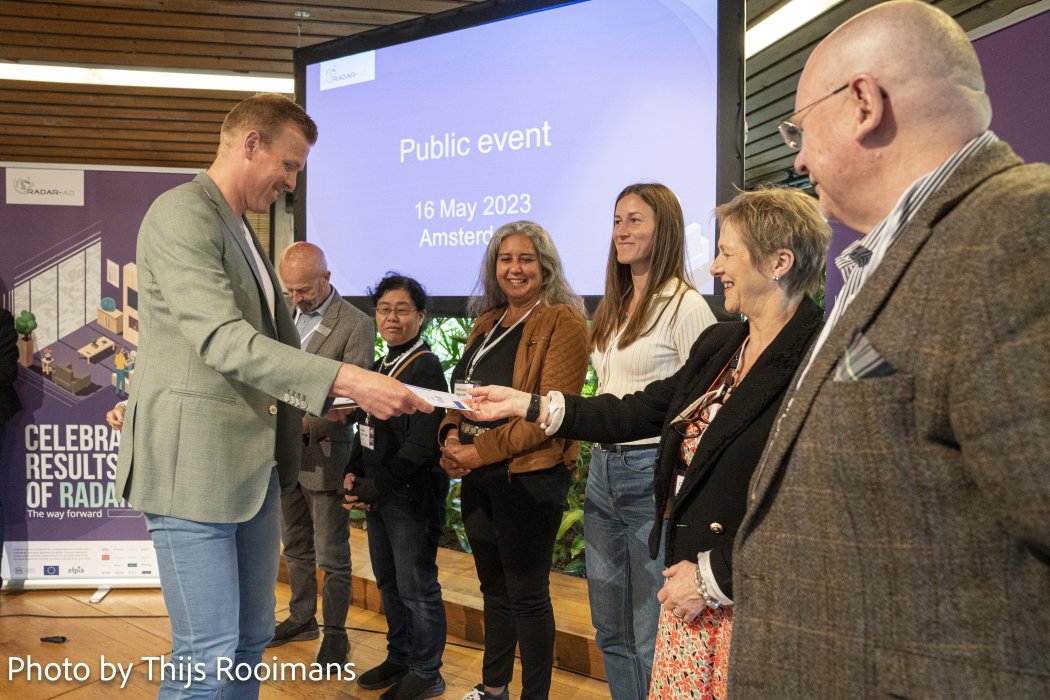
Dr Casper de Boer – coordinator of the RADAR-AD clinical study, shared his experience with working with the RADAR-AD PAB members and handed out certificates of appreciation to all present. He said: “This group was determined to make a contribution throughout the entire RADAR-AD clinical study. They challenged us and wanted to insure their voice was integrated into the design of the studies and the execution of the project. For instance, we adapted the age range of our clinical study, and altered our selection of devices. When we discussed analysis, we focused on identifying deficits by using technology. You pointed us to the abilities that we can detect. You were invaluable and we could not do as good as we did without you! Thank you all for this – it is much appreciated by all of us!”