News
Turning up the heat on malaria
Eradicating malaria is one of the world’s greatest challenges – one that has confounded scientists for decades.
The disease’s clinical manifestations, which include headache, fever, fatigue, pain and nausea, are treatable but because of the complex life cycle of the malaria parasite, partly in man and partly in the mosquito, eradicating the disease entirely remains extremely difficult.
Infected people can remain asymptomatic for several weeks, during which time the malaria parasite can be passed back to a biting mosquito, which then goes on to infect other people. The parasite can even lay dormant in a patient’s liver, only to re-emerge months or years later and start the cycle all over again. Thanks to identification of novel lead compounds for candidate drug development, together with unique screening assays to determine their effects, a Lygature-managed consortium of Dutch companies and academic research groups is addressing new ways of breaking the cycle.

“Current drugs do not kill the parasite stages that are transmitted. They cure clinical disease but they don’t block transmission. So people who are treated for malaria are still able to infect mosquitoes, and therefore act as an infectious reservoir to the rest of the community,” explains Dr. Koen Dechering, Chief Executive Officer of consortium partner TropIQ Health Sciences (Nijmegen The Netherlands). “If you want to eradicate malaria, you need to do something about this infectious reservoir by developing a drug that prevents transmission.”
The potential drug candidates that TropIQ is helping to bring forward belong to a series of compounds known as pantothenamides – analogs of pantothenic acid (vitamin B5) that are believed to interfere with the malarial parasite’s Coenzyme A (CoA) biosynthetic pathway. However, clinical use of current pantothenamide drugs is limited by their susceptibility to rapid breakdown in the human body.
“One of the breakthrough achievements of the project team was the generation of stable pantothenamides that are resistant to rapid breakdown by serum pantotheinases,” says Koen. “We believe we have a solution that could work if people took a daily dose for four days, but to ensure treatment compliance we would ideally like to develop a drug that is stable enough and safe enough to be administered as a single dose. Fortunately, the consortium includes some very good medicinal chemists to help us do it.”
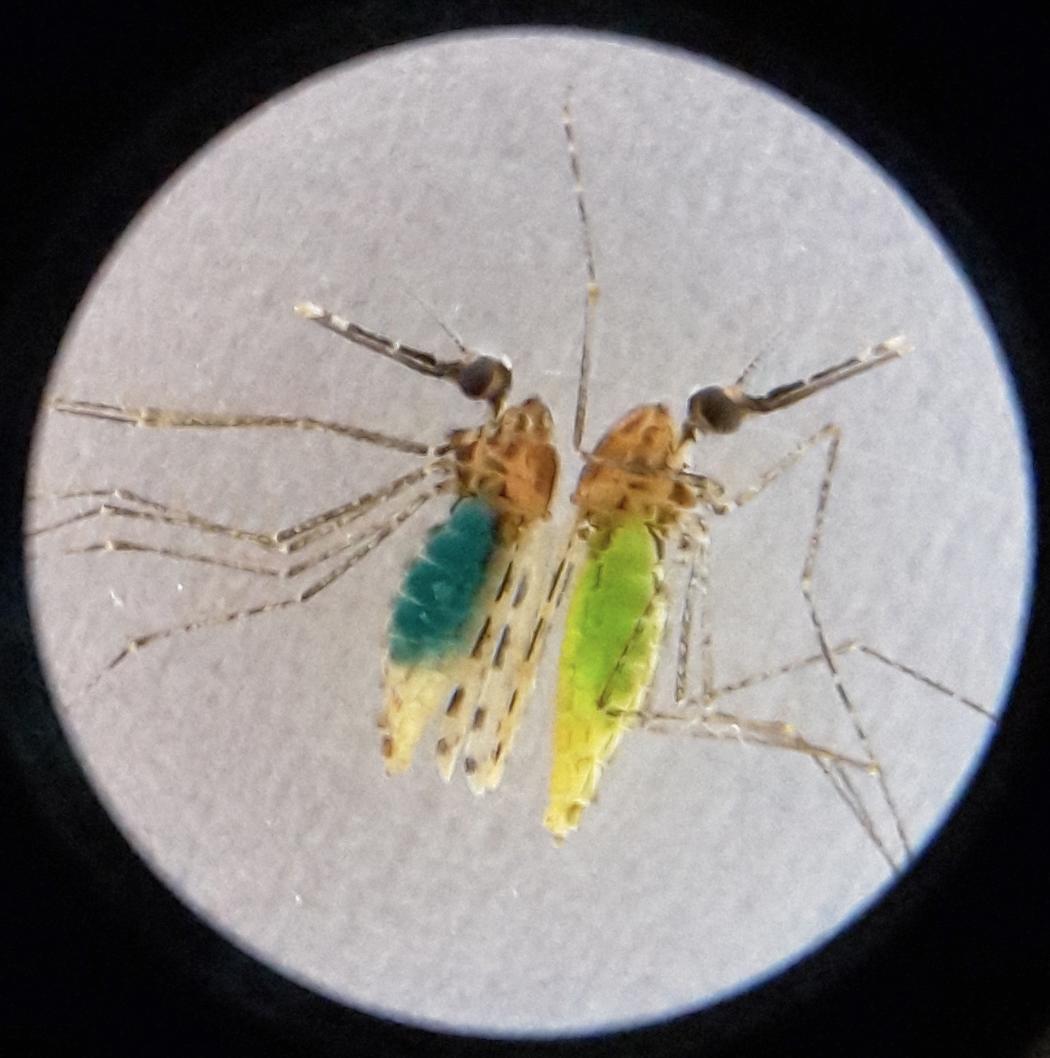
TropIQ’s primary technological contribution to the drug development program is a unique translational screening cascade that models the complete transmission life-cycle of the malarial parasite. The company first cultures malarial parasite in human blood and then feeds the infected blood to live mosquitoes. Potential drug candidates are administered to the blood borne parasites to determine their effect on the viability of transmission to the mosquitoes.
“Basically we measure the potency of a compound and we feed that back into the chemistry design,” says Koen. “The beauty of our screening cascade is that we can typically turn round the results in around 2 weeks.”
The company, which uses revenues from contract research to fund its drug discovery activities, initially investigated pantothenamide drugs as part of the TI Pharma ‘Novel Antimalarials’ project, which completed in 2014. The results sufficiently impressed the Medicines for Malaria Venture (MMV) that they agreed to fund continued research in the form of the Lygature-managed MMV-PDP project.
In addition to former TI Pharma partners TropIQ, PanSynt, Pivot Park Oss and Radboud University Medical Center, the new consortium also includes MMV, Dutch partners Mercachem and the Biomedical Primate Research Center, and the Centre National de Recherche et de Formation sur le Paludisme in Ouagadougou, Burkina Faso. Within the MMV-PDP project, the Biomedical Primate Research Center focuses on relapse prevention drugs that target dormant malaria parasites in an infected person’s liver.
While the parallel work on relapse prevention is still in its early stages, the work on a candidate drug that could cure the clinical disease and block transmission is relatively well advanced.
“We need to further improve the metabolic stability of the compound and determine its pharmacokinetics in different species to predict the required human dose, and then we need to do the necessary toxicity studies to ensure the drug’s safety, but we are confident we can arrive at a single dose solution and hope to start a first-in-human study by the end of 2018,” says Koen. “If we succeed, it will be a real first for the Netherlands.”
The MMV-PDP project is one of several neglected disease projects being managed and supported by Lygature, which plays a leading role in bringing the relevant players together and keeping them informed and involved.
“Just like other drugs for so-called ‘neglected diseases’, for malaria drugs to be effective in large-scale transmission blocking and relapse prevention programs they need to be cheap, which probably explains why historically there has been a lack of investment in developing these types of drug,” explains Lygature Program Manager Dr. Herman Verheij. “That’s why we have worked hard in the Netherlands to leverage funding from the Dutch Ministry of Foreign Affairs as well as from international organisations such as the EU, the Bill & Melinda Gates Foundation and the Japanese GHIT fund to bring together academic researchers, innovative SMEs and pharma companies to collaborate on such a worthy endeavour.”
Lygature’s first Partnership Meetup – a one-day event on November 15, 2016, organized by and for life science professionals – will include a parallel session titled ‘London Declaration on Neglected Tropical Diseases – Quo vadis?’. During the session, international experts from academia, industry, the Dutch Government and NGOs will share their experiences and views on how R&D in neglected tropical diseases has progressed since 2012, as well as providing insights into what is required to move forward. To register for the event, visit events.lygature.org