

Projects
Non-Biological Complex Drugs (NBCD) Working Group
Towards aligned, science-based approval and post-approval standards for non-biological complex drugs

The Non-Biological Complex Drugs Working Group was established in 2009, to stimulate discussion of the safety and efficacy of NBCD innovation and follow-on products.

15
papers, 3 blogs and 1 book published

5
partners from industry and academia

About NBCDs
Non-biological complex drugs (NBCDs) consist of different (closely related and often nanoparticulate) structures that cannot be fully quantitated and characterized by physico-chemical analytical means. Examples include glatiramoids, iron-carbohydrate complexes, polymeric micelles, complex ocular emulsions and liposomes. The complex nature of NBCDs means that minute variations in the manufacturing process can substantially change the composition of final products, and this poses a challenge for the development of regulatory guidelines. The working group aims to ensure patient benefit through a science-based approach for the approval of NBCD products and follow-on versions.
For more information visit our website.
Key publications
- Klein, K., Borchard, G., Shah, V.P., Flühmann, B., McNeil, S.E. and de Vlieger, J.S.B. (2021), A pragmatic regulatory approach for complex generics through the U.S. FDA 505(j) or 505(b)(2) approval pathways. Ann. N.Y. Acad. Sci.. https://doi.org/10.1111/nyas.14662
- K.Klein, P.Stolk, M.L.De Bruin, H.G.M.Leufkens, D.J.A.Crommelin, J.S.B.De Vlieger. The EU regulatory landscape of non-biological complex drugs (NBCDs) follow-on products: Observations and recommendations. European Journal of Pharmaceutical Sciences, Volume 133, 15 May 2019, Pages 228-235.
- de Vlieger, J.S.B., Crommelin, D.J.A., Tyner, K. et al. Report of the AAPS Guidance Forum on the FDA Draft Guidance for Industry: “Drug Products, Including Biological Products, that Contain Nanomaterials”. AAPS J 21, 56 (2019).
- Hussaarts et al. Equivalence of complex drug products: advances in and challenges for current regulatory frameworks; Ann N Y Acad Sci Apr 26. [Epub ahead of print] (2017)
- Crommelin and de Vlieger, 2015 (Eds.), Non-Biological Complex Drugs. The Science and the Regulatory Landscape; AAPS/Springer, Advances in the Pharmaceutical Sciences Series, NY.
- Crommelin et al. Different pharmaceutical products need similar terminology; AAPS J. 2014 Jan;16(1):11-14.
- Schellekens et al. How to Regulate Nonbiological Complex Drugs (NBCD) and Their Follow-on Versions: Points to Consider; AAPS J. 2014 Jan;16(1):15-21.
A list of NBCD-related publications co-authored by Lygature can be found on this page.
Driving science-based discussions
The NBCD Working Group was established following a scientific workshop organized by TI Pharma – now Lygature. The partnership brings together both industry partners and international experts, who engage in debate with a wide range of relevant stakeholders. Lygature provides the necessary support and scientific expertise, to ensure that discussions are inclusive and productive. Activities include:
- Scientific management. Lygature is responsible for scientific management and organizational aspects of the working group as a whole. Responsibilities include general project management, management of strategic alliances and alignment with relevant stakeholders.
- Provider of neutral ground. As an independent third party with no commercial interest, Lygature has hosted the NBCD Working Group from the beginning, and provides neutral ground to facilitate discussion between stakeholders.
- Communication & dissemination. An important contribution by Lygature is communication and dissemination, with the aims of establishing terminology and creating awareness of the challenges faced. Activities include: presenting at international conferences; (co-)writing of scientific articles, white papers and blogs; organization of conferences; and brand building.
The NBCD Working Group contributes strongly to Lygature’s mission of accelerating the launch of medicines that improve society's wellbeing. Since stakeholders often have different interests, the project has required extensive management capabilities, along with expertise in both science and the regulatory landscape.
Lygature together with

Project updates
-
Seven articles on complex drug products in special issue of NYAS Journal
The Annals of the New York Academy of Sciences (NYAS) published a special issue on equivalence of complex drug products. The issue features seven articles on a broad range of topics, including nanosimilars, biosimilars and regulatory frameworks.
The issue, edited by Daan Crommelin and Jon de Vlieger from the NBCD working group, is the outcome of a meeting that the NYAS organized in November last year, on the scientific and regulatory challenges associated with complex drugs products. The eBriefing and speaker presentations of this meeting can be found on the NYAS website.
Special Issue: Equivalence of Complex Drug Products: Scientific and Regulatory Challenges. November 2017. Pages 1–89.
-
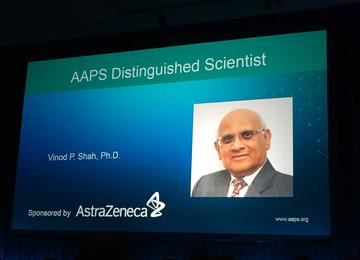
NBCD Working Group congratulates Dr. Vinod Shah on Distinguished Pharmaceutical Scientist Award
Dr. Vinod Shah received the Distinguished Pharmaceutical Scientist Award from the American Association of Pharmaceutical Scientists (AAPS). This prestigious award is intended to recognize the outstanding accomplishments of an individual whose work has had an impact in the pharmaceutical sciences, regulatory and/or technology fields.
Vinod – a member of the NBCD Working Group – received the award yesterday, at the opening ceremony of the AAPS Annual Conference in San Diego. It was handed out to him by AAPS President Dr. Binodh DeSilva.
-

NBCD Working Group addresses importance of multi-stakeholder interactions at FDA Public Hearing
On 3 May 2017, the FDA organized a Public Hearing on the current status of the regulatory science initiatives for generic drugs, providing an opportunity for public input on research priorities in these topic areas. The NBCD Working Group participated in the hearing and addressed the importance of science-based multi-stakeholder interactions (industry, academia, professional societies, and other interested parties) to solve the challenges in the field of complex drugs. The FDA has indicated to take the information it obtains from the public workshop into account in developing the fiscal year (FY) 2018 Regulatory Science Plan.