Home
Partnerships MeetUp 2017
Partnerships MeetUp 2017 video report
Meeting report
Morning parallel sessions
Morning parallel session 1
Complex drug products: new insights in development, production & characterization
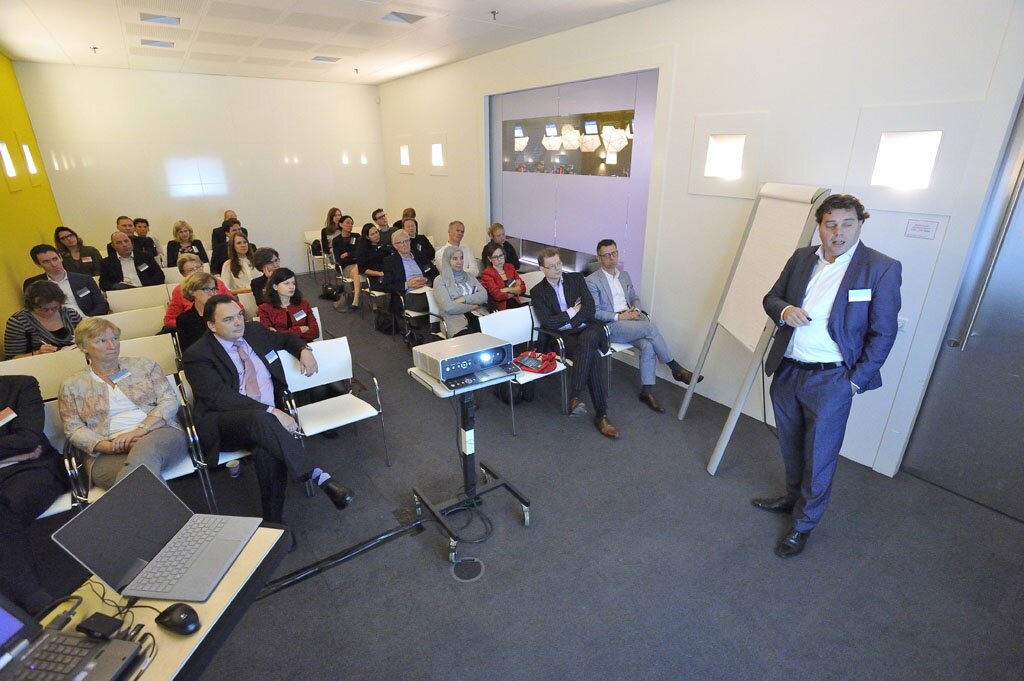
Advanced Therapy Medicinal Products (ATMPs) and nanomedicines provide new opportunities to enlarge the medical toolbox. Yet the road from development to approval poses many challenges for scientists, developers and regulators. Only one or two cell therapies each year receive approval. Regulators struggle with the characterisation and therefore with the definition of complex drugs. Where the identity of a small molecule can be established by chemical analysis, that is seldom the case with more complex drugs. This proves a problem when you want to establish equivalence between the original drug and a generic replacement. Production and quality control can also pose many challenges. Collaboration is the only way forward.
Morning parallel session 2
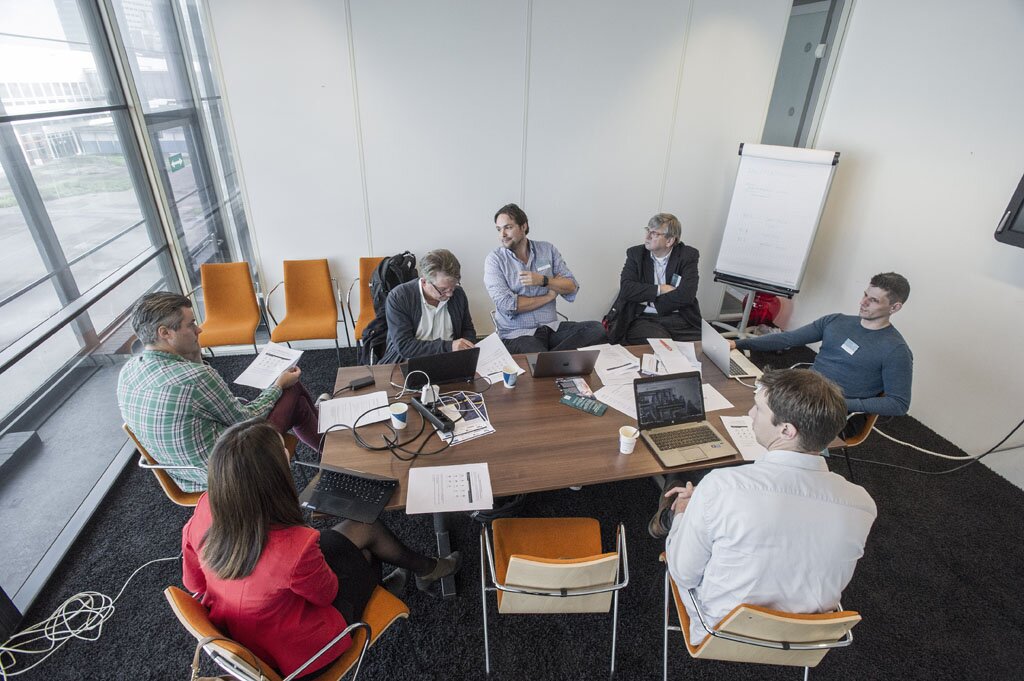
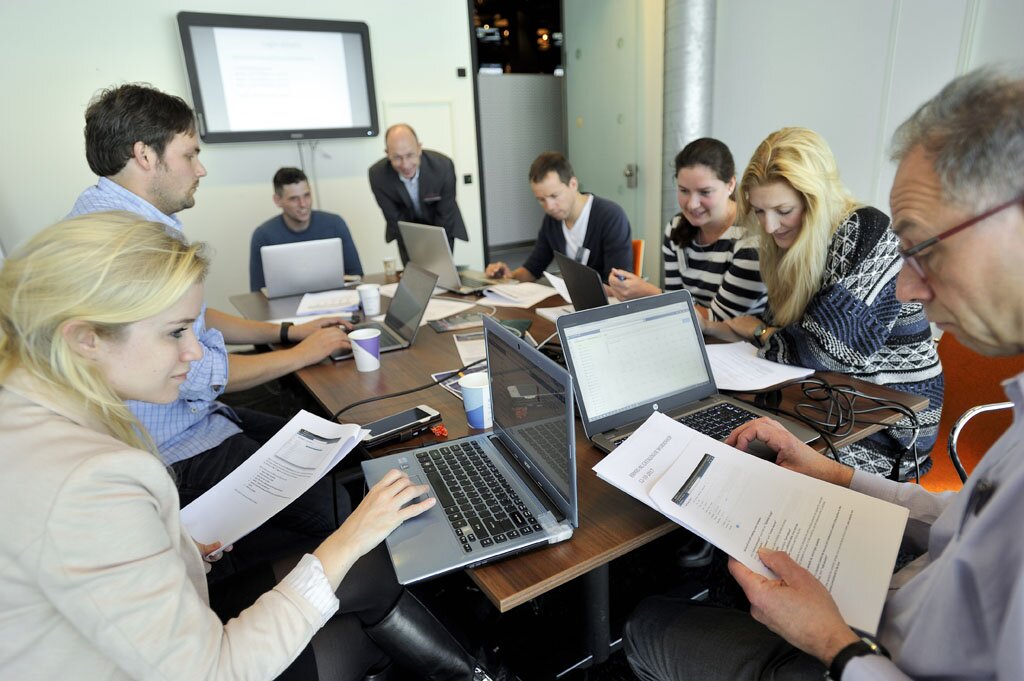
Hands-on workshop: data management tools for translational research
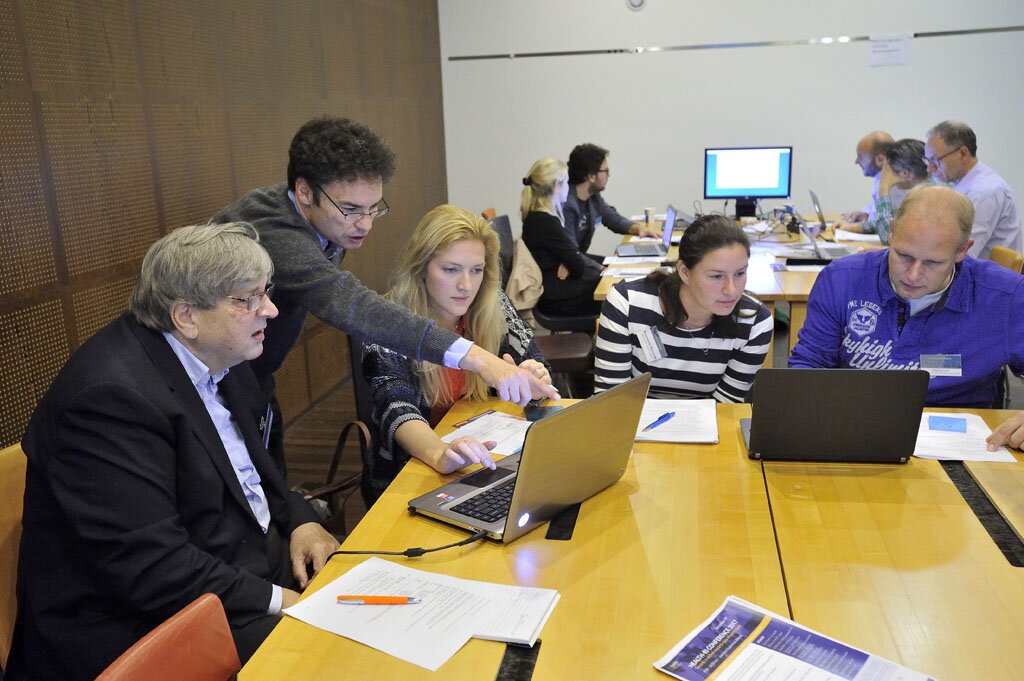
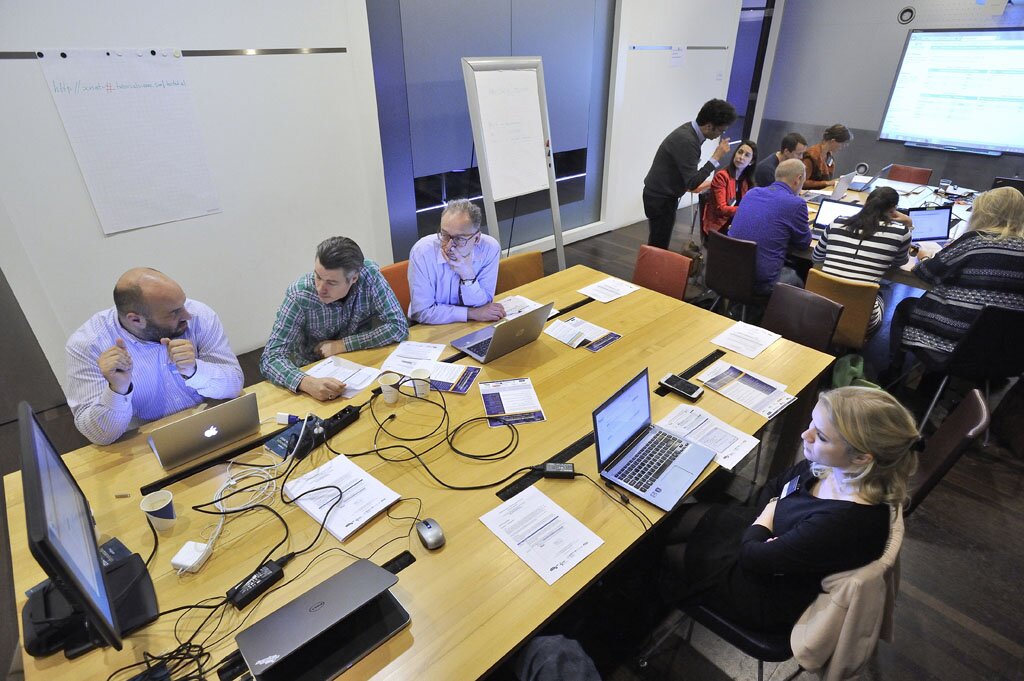
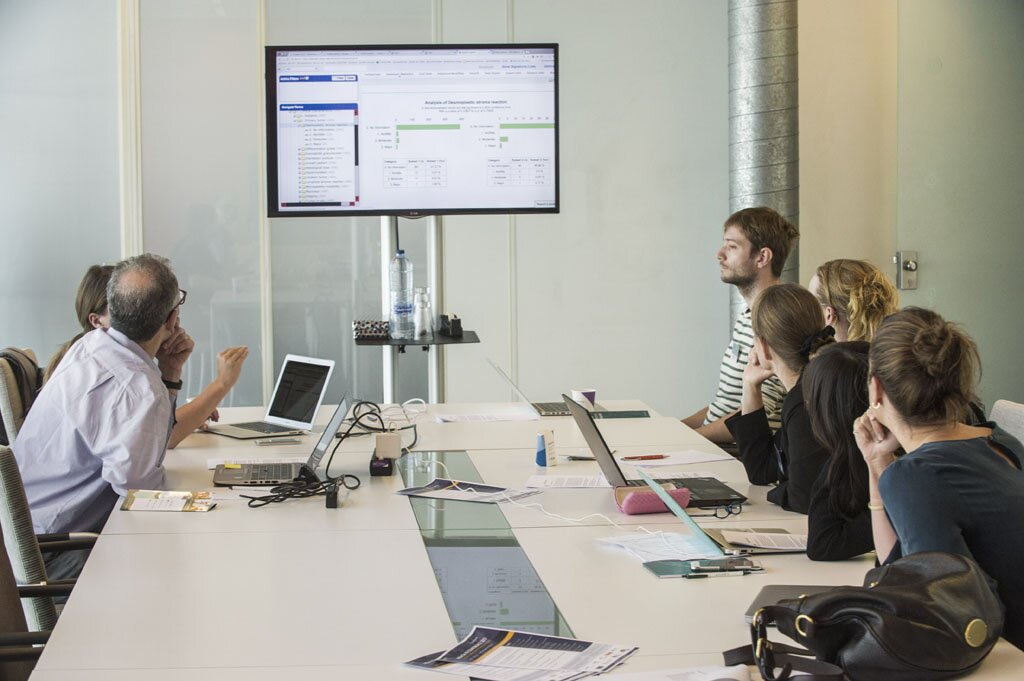
In a successful hands-on workshop, participants were able to follow practical sessions lead by experts in various fields of data management in translational research. From clinical (OpenClinica - Jacob Rousseau) to imaging (XNAT - Adriaan Versteeg and Marcel Koek) to biobanking (OpenSpecimen - Erik van Iperen and Catalogue - Ricardo de Miranda Azevedo) research data, integration thereof (tranSMART - Mariska Bierkens and Wibo Pipping), as well as an application of the FAIR principles combining clinical and omics data (myFAIR analysis - Rick Jansen and Saskia Hiltemann). Participants were also able to obtain expert advice on their own data stewardship questions. Participants taking part in the practical sessions were involved and had good discussions.
Morning parallel session 3
Future topics for regulatory science in the Netherlands
During this session, moderated by Bert Leufkens (Utrecht University), the future regulatory science agenda in the Netherlands was discussed from four different viewpoints: the regulator, industry, academic and patient perspective.
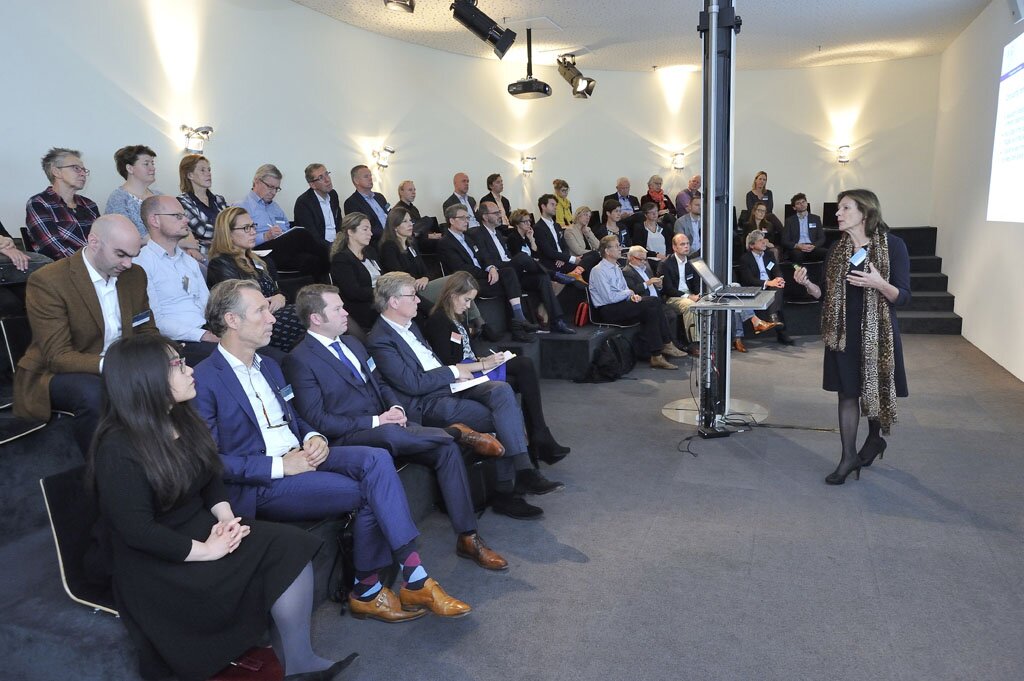
Christine Gispen-de Wied (CBG/MEB) presented a topic list for future research based on multi-stakeholder discussions within the Regulatory Science Netwerk Nederland (RSNN) and internal priorities within the MEB. This list included amongst others the sharing of data across the health chain (from trial to reimbursement) and the use of real world data. Just Weemers (Dutch Association Innovative Medicines) accentuated the future challenge of collecting real world data that is of sufficient quality to create evidence. According to both Christine and Just, new sources of data and evidence should be explored in the future.
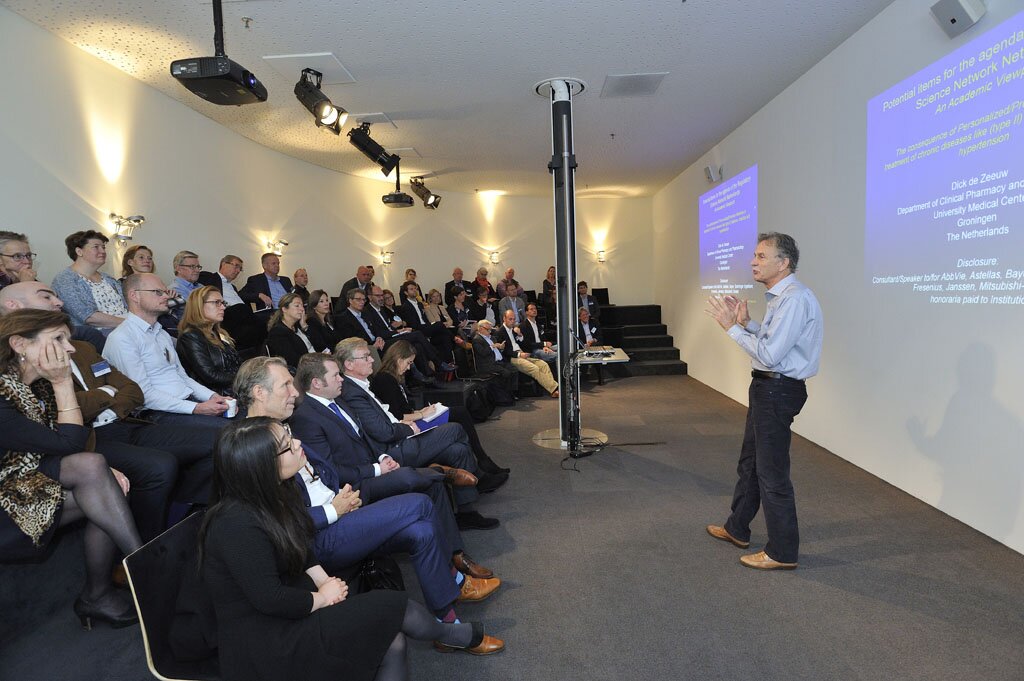
Dick de Zeeuw, professor at the UMCG, added to the future topic list the need for a personalized medicine approach in the regulatory environment, a viewpoint shared by Just Weemers. Patient’s responses may vary populations are becoming smaller, so and the unmet medical needs to become more personalized.
All speakers acknowledged the increased collaboration between stakeholders in the field of regulatory science, but more stakeholders should be connected in this dialogue. Patient advocate Cees Smit emphasized the importance of including patients in regulatory discussions, as outcomes of risk-benefit or cost-effectiveness studies are often divergent from patient experiences and expectations. In addition, societal dialogue is required for acceptance in further shaping the regulatory environment.
Overall, many topics for future research have been identified. Bert Leufkens concluded ended the session by underlining the importance of a safe research space to share and access data in multi-stakeholder collaboration.
Morning parallel session 4
Innovations for neglected tropical diseases: the next level
In this session, three different platforms were presented - from early discovery to a diagnostic field test.
From the various discussions about these presentations it became clear that in the field of NTDs, platforms are the way to go. They can be used, in case of discovery, to possibly tackle multiple diseases with similar targets at the same time, in case of model platforms to develop diagnostic markers for infection and drug and vaccine discovery, and in case of field diagnostics to develop multiple tests in rapid succession.
Plenary session
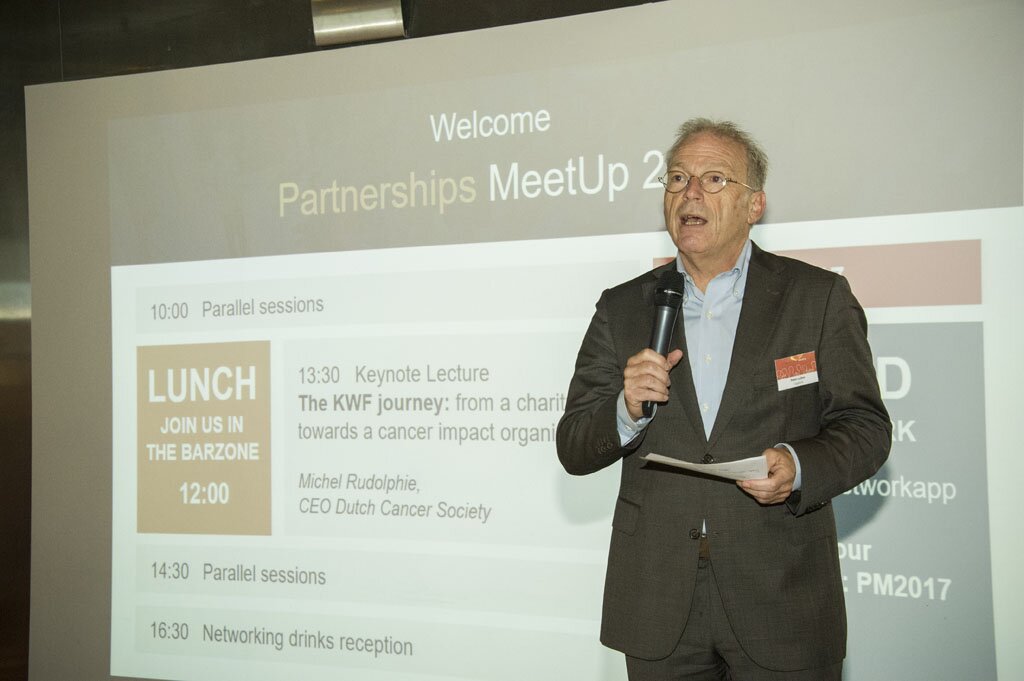
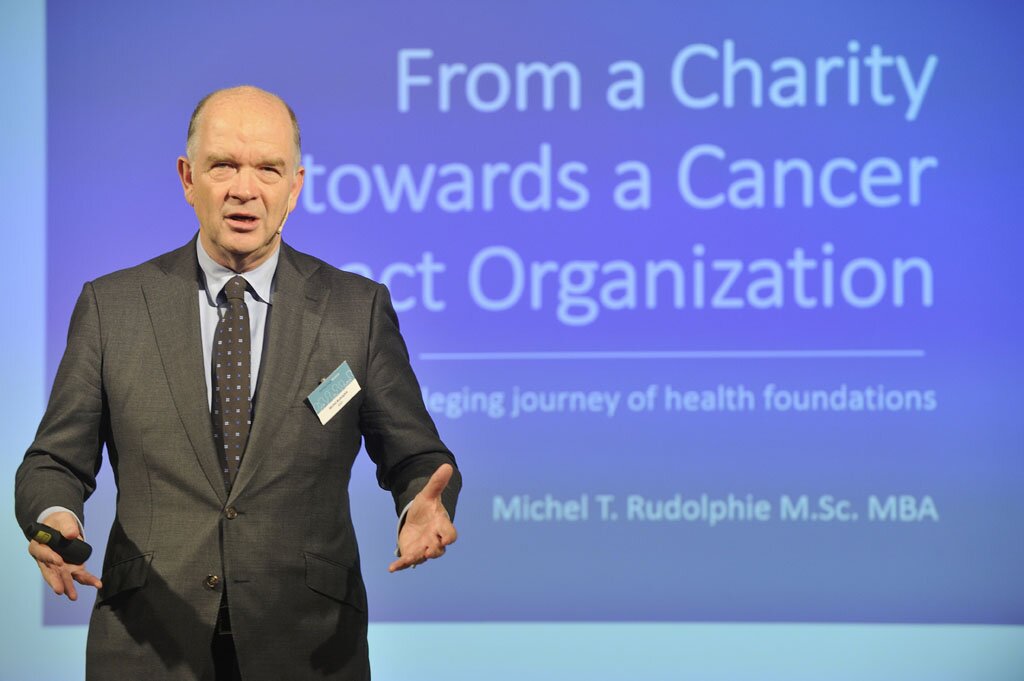
The keynote lecture was presented by Michel Rudolphie, former CEO of the Dutch Cancer Society (KWF Kankerbestrijding). KWF is the largest health fund in the Netherlands with an annual budget of €145 million from over one million donors. Every year over 45.000 people die from cancer in the Netherlands alone. KWF is determined to beat cancer, based on three goals: less cancer, more cure and a better quality of life for those affected by cancer, be it patients or family members.
Traditionally KWF was mainly concerned with funding research following a fund & forget strategy. The vision of Rudolphie when he started as head of KWF was to create more impact with integrated innovation. Scientific publications don’t cure patients. Rudolphie embarked on a quest to fundamentally change KWF from a charity fund to a cancer impact organisation. Still funding research, but through a ‘commit & integrate’ strategy. Many challenges still remain: how do you measure impact for example? How do you increase transparency? How to deal with strong emotions regarding change? How to grow in income as KWF?
Afternoon parellel sessions
Afternoon parallel session 1
Game changers in clinical research: wearable technology and e-monitoring
Samuel Smits and Lisa Vogelpoel from Gupta Strategists illustrated the benefits of moving patient care from hospital to home. There is a general belief that the concept of diagnosing and monitoring at distance strengthens healthcare and takes away a practical and financial burden for hospitals in the next decades. The most challenging tasks herein are to change current (more conservative) mindsets and train a new generation of physicians to fully implement the new roles for clinical personnel and patients in this system.
Hans-Peter Brunner-La Rocca and Josiane Boyne presented a practical example for healthcare assistance and monitoring at home: Molly, the virtual heart failure coach. It is expected that tools like this can majorly impact healthcare, not only through monitoring health and disease, but also as educative help for patients. Current challenges are to test the acceptance and usability of a nurse avatar in healthcare.
Faith Matcham pointed out that public-private partnerships in complex research projects such as RADAR-CNS provide multidisciplinary collaborations, ensure substantial financial investment and secure a sustainable study outcome. Regarding wearable devices for research, aspects of data storage, analysis and security and (inter)national regulatory requirements need to be carefully reviewed.
From this session we can conclude that the aim is to produce accessible and affordable innovative healthcare tools that can be standardized amongst multiple disease areas.
Afternoon parallel session 2
Sustainable business models in neglected tropical diseases
In this session, three spin-off companies in the field of NTDs presented their business models - finding a working business model is obviously difficult in a “not for profit” field.
“Break even” models can be accomplished by finding both government/industrial funding for each new project, the latter (industrial funding) often stemming from pharmaceutical CSR (Corporate Social Responsibility) programs. A model in which a (small) profit can be made, and a company can slowly grow, is hard to come up with. One company (TropIQ) however managed to develop a working hybrid model, combining further developing their core technology using government (national and EU) funding, with performing fee-for-service activities for e.g. PDPs and industry.
Afternoon parallel session 3
Dealing responsibly with ethical, legal and societal issues (ELSI) in Personalised Medicine research
Personalised Medicine promises to bring powerful new ways of improving treatment and health care, tailored to individual patients. At the same time, this leads to many different ethical, legal and societal issues. How, for instance, can privacy be protected when data sharing is the norm? Who decides how data is shared when research is funded by many different actors, including commercial companies? And what about patients’ rights and informed consent?
The national Health-RI Servicedesk could help practitioners to address these issues, by offering accessible advice, better opportunities for mutual learning and coordination, and an overview of areas for improvement. In this session, Susanne Rebers (Netherlands Cancer Institute, ELSI Servicedesk), explained the plans for the Servicedesk, a project which is currently in its start-up phase. By showing the different issues she faces in the AACR project GENIE, Mariska Bierkens (Netherlands Cancer Institute) illustrated the need for such a servicedesk. Participants engaged in an active discussion on the issues they face and the expectations they would have of the Servicedesk. The ELSI Servicedesk will be further improved using the valuable input gathered in the session. A beta version of the Servicedesk will be online from February 2018 onwards.
Afternoon parallel session 4
JIM session: ‘Transformation through collaboration’
One of the afternoon sessions was focused on the transformation of Healthcare through collaborative initiatives. Three motivated speakers presented both a vision but also actual achievements about the success of collaborations between different stakeholders. In a very open and active discussion it became clear that one of the main ingredients to make such a collaboration to a success is “trust”. Another ingredient that is sometimes needed is strong decisive leadership by the government which can help to speed up the process of collaboration. Another aspect that was discussed is how these collaborative achievements will or can affect current healthcare practices, or more specifically can reduce healthcare costs. The follow up on this is that we need transparency and a better communication to the public to show what is needed to develop new drugs or devices.
Program
09:30 Walk-in and coffee
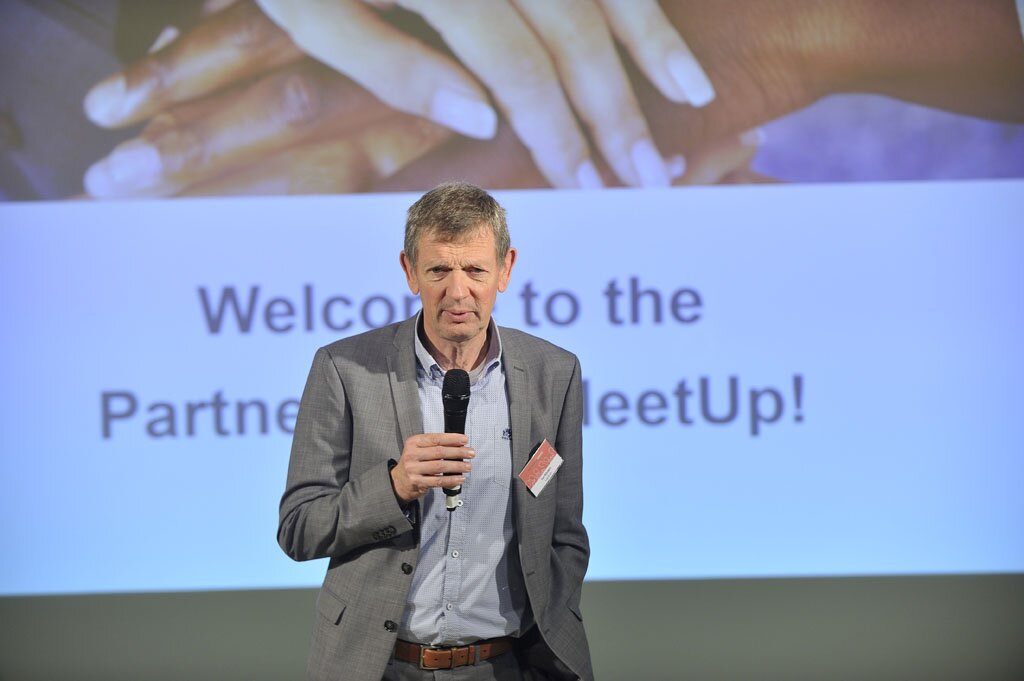
09:50 Welcome
10:00 Parallel sessions
-
Complex drug products: new insights in development, production & characterization
Recent developments in innovative technologies like Advanced Therapy Medicinal Products (ATMPs) and Nano-medicines provide new opportunities to address the increasing demands of an aging population, as well as for diseases with high unmet medical needs.
Despite recent innovations and considerable research and development efforts there is clear mismatch between these research and development efforts and the number of approved products in the European Union. The road from development to approval poses many challenges for scientists, developers and regulators and asks for collaborative opportunities to meet those challenges, which we will discuss in this session.
Speakers
How to adapt to new technologies and ATMP’s: a CMO’s view
Alexander Willemse
PhD - BioConnectionAssuring quality of non-biological complex drugs (NBCDs): EDQM and the European Pharmacopoeia
Gerrit Borchard
Prof - Chair of the NBC working party at the European Directorate for the Quality of Medicines & Health Care (EDQM)Development of a personalised, cellular product in hemato-oncology; risks and opportunities
Jeroen Rovers
PhD, MD - CMO Kiadis PharmaHow to bring ATMPs to the patient: a funders perspective
Ineke Slaper-Cortenbach
Programme Manager ‘Translational Research and International Programs' at ZonMw -
Hands-on workshop: data management tools for translational research (fully booked)
Together with the joint Health-RI infrastructures TraIT, BBMRI-NL and DTL
Please note: this session has been fully booked, it is no longer possible to register for this session
Facilitators:
Mariska Bierkens (NKI), Wibo Pipping (The Hyve), Saskia Hilteman (ErasmusMC), Erik van Iperen (AMC), Marcel Koek (ErasmusMC), Ricardo de Miranda Azevedo (AMC), Jacob Rousseau (NKI), Rick Jansen (ErasmusMC), Adriaan Versteeg (ErasmusMC)
A biomedical researcher anno 2017 is also a data steward responsible for the data collection, data analysis, and reusability of the data. This responsibility and accountability for the data is often summarized in the acronym FAIR data: Findable, Accessible, Interoperable, and Reusable. To facilitate the translational researcher with this data stewardship task, the collaborating research infrastructures in The Netherlands have been implementing and maintaining a broad set of solutions.
This workshop, a follow-up of the 2016 edition, will offer a unique opportunity to get exposed to these solutions in an informal setting. No lengthy classroom lectures; instead, you will get hands-on experience with a broad set of solutions, from Clinical to Imaging to Genomics and the integration thereof. You will be able to follow generic tutorials or even better: process your own data and tackle your own data issues. The sessions will be led by experts in the field.
Workshops
- OpenClinica (Clinical Data, eCRF)
- XNAT (Imaging, DICOM)
- Biobanking: Catalogue and OpenSpecimen
- How to make your data FAIR (myFAIR)
- tranSMART data Integration
-
Future topics for regulatory science
Moderator: Prof. Dr. Bert Leufkens, Utrecht University, Utrecht | download presentation (pdf)
Regulatory science has contributed in an important way in advancing the the development of new medical solutions for patients. Regulators, academia, industry and patients could work together in shaping the future with a shared understanding of the issues to be addressed. Building upon science based discussions, subsequent regulatory innovation will facilitate timely access to new treatments. Regulatory innovation is one of the core areas driven by Lygature in various projects (http://www.lygature.org/our-expertise/regulatory-innovation).
The session on regulatory science at the FIGON Dutch Medicines Days organized by the Regulatory Science network Netherlands on Monday 2nd October will focus on presenting results of work done by several organizations.
The session at the Partnerships MeetUp will focus on collecting ingredients for a research agenda in regulatory science. In this session, perspectives from several stakeholders will be presented as building blocks for an integrated and comprehensive agenda.Speakers
- Dr. Christine Gispen-de Wied, College ter Beoordeling der Geneesmiddelen – Medicines Evaluation Board (CBG-MEB), Utrecht | download presentation (pdf)
- Prof. Dr. Dick de Zeeuw, University Medical Center Groningen (UMCG), Groningen | download presentation (pdf)
- Just Weemers, Pfizer, on behalf of Vereniging Innovatieve Geneesmiddelen | download presentation (pdf)
- Dr. Cees Smit, patient expert | download presentation (pdf)
-
Innovations for neglected tropical diseases: the next level
Moderator: Maria Yazdanbakhsh, Leiden University Medical Center
Together with representatives from the Pediatric Praziquantel Consortium, PDE4NPD, and MMV-PDP
This session will continue in the afternoon with the session: Sustainable business models in neglected tropical diseasesTranslating biomedical research and innovations into health solutions can be a cumbersome process, even more so for neglected tropical diseases (NTDs). Despite a growing knowledge on the pathophysiology and etiology of NTDs, the number of novel diagnostics, drugs and vaccines entering tropical medicine practice remains disappointing.
Divided over two sessions, you will learn more about partnerships that are filling the NTD product pipeline, and those that put great effort into translating scientific hypothesis into clinical practice.
This (morning) session will focus on innovative research performed in various consortia.
Speakers:
- Rob Leurs - Principal Investigator PDE4NPD
- Barrie Rooney - UoK and MSF: Diagnostics for Tropical Parasites
- Meta Roestenberg - Physician/scientist, dept. Parasitology LUMC
12:00 Lunch
13:30 Keynote Lecture
The KWF journey: from a charity towards a cancer impact organization
Michel Rudolphie, CEO Dutch Cancer Society
14:30 Parallel Sessions
-
Game changers in clinical research: wearable technology and e-monitoring
Moderator: Pieter Stolk, PhD, Program Manager, Lygature
With fast changing advances in technology, continuous monitoring of health has become a daily practice and is nowadays available to all. Fitness trackers are a fine example. Clinical research can vastly benefit from such developments by using wearable devices and smart online tools to closely monitor large cohorts of patients in a home environment. In the near future, these tools can be of help to remotely assess patterns in disease and predict disease progression, which can ultimately lead the way to personalized therapy and early diagnosis of complex diseases. The use of smart technologies for clinical research, however, requires a multidisciplinary approach and come along with a set of challenges regarding technical innovation, patient perspectives, regulation, privacy, security and costs. In this session, experts from academia, industry and public-private research collaborations will present their view on advantages and challenges in this field by exploring ongoing (clinical) studies that use wearable and remote technology in their study design.
Speakers
No place like home
Samuel Smits
Director at Gupta Strategists, Ophemert, the NetherlandsCan a nurse avatar support patients with chronic heart failure?
Prof. dr. Hans-Peter Brunner-La Rocca, MD, PhD
Director Heart Failure Clinic at Maastricht University Medical Center (MUMC+), Maastricht, the NetherlandsJosiane Boyne, PhD
Coordinator Heart Failure Care at Maastricht University Medical Center (MUMC+), Maastricht, the NetherlandsIdentifying Digital Biomarkers of Clinical State: Experiences from the Remote Assessment of Disease and Relapse in Central Nervous System (RADAR-CNS) Project
Faith Matcham, PhD
Post-Doctoral Research Associate at Institute of Psychiatry, Psychology and Neuroscience, Department of Psychological Medicine, King’s College London, UK -
Sustainable business models in neglected tropical diseases
Moderator: Kamran Rafiq, The International Society for Neglected Tropical Diseases (ISNTD)
Together with representatives from TropIQ, Avivia and MondialDx
This session is a continuation from the morning session: Innovations for neglected tropical diseases: the next levelTranslating biomedical research and innovations into health solutions can be a cumbersome process, even more so for neglected tropical diseases (NTDs). Despite a growing knowledge on the pathophysiology and etiology of NTDs, the number of novel diagnostics, drugs and vaccines entering tropical medicine practice remains disappointing.
Divided over two sessions, you will learn more about partnerships that are filling the NTD product pipeline, and those that put great effort into translating scientific hypothesis into clinical practice.
This (afternoon) session will focus on the problem of developing sustainable business models for small (spin-off) companies active in the NTD field.
Speakers:
- René Paulussen - Managing Director MondialDx
- Hans Platteeuw - Founder & CEO Avivia
- Koen Dechering - CEO TropIQ
-
Dealing responsibly with ethical, legal and societal issues (ELSI) in Personalised Medicine research
Personalised Medicine promises to bring powerful new ways of improving treatment and health care, tailored to individual patients. Yet great power to improve health, care and well-being comes with great responsibility. The ELSI Servicedesk, set up by partners of COREON and BBMRI-NL, aims to offer guidance and answers to the ethical, legal and societal conundrums faced by life science professionals, policymakers and patients alike. In this interactive workshop, we map out the issues you face in policy and practice, provide tentative answers where possible, and explore ways in which a shared service could help address these problems effectively and responsibly.
The ELSI Servicedesk is funded by ZonMw, Zilveren Kruis and the Dutch Cancer Society from the Personalised Medicine Program.
Speakers
Dr.ir. Mariska Bierkens
Scientific researcher at the Netherlands Cancer InstitutePoweruser for the Center for Translational Molecular Medicine, Translational Research IT (CTMM TraIT) to evaluate data-management tools in translational research; part of the Foundation Team involved in further developing the data-integration platform tranSMART; and data consultant for researchers wanting to use sustainable research IT solutions for their data.
Dr. Bierkens will be speaking about the ethical, legal and societal challenges encountered in the AACR Project GENIE.
Dr. Susanne Rebers
Research fellow at the Netherlands Cancer Institute
Project leader Health-RI ELSI ServicedeskSusanne Rebers works as a postdoctoral researcher at the Netherlands Cancer Institute on a number of projects relating to information provision, consent procedures and responsible use of human tissue and data in health research.
Martin Boeckhout MSc MA
Policy advisor on ethical, legal and societal issues for BBMRI-NL
Project leader Health-RI ELSI ServicedeskMartin Boeckhout is policy advisor on ethical, legal and social issues to BBMRI-NL. Together with Gerhard Zielhuis, Martin set up and coordinates BBMRI’s Patient and Public Advisory Council (Maatschappelijke Adviesraad Biobankonderzoek). He is interested in issues at the interface of science, politics and public policy.
-
JIM session: ‘Transformation through collaboration’
How can we effectively address the major health challenges in modern society? How do we keep healthcare sustainable? How can we effectively make use of big data? How do we increase the chance to find effective new medicines? One of the answers includes transformation of current ways of working. This session highlights three tools in use for taking diverse players outside their comfort zones to jointly pioneer breakthroughs for the benefit of patients:
- Developing a shared vision for healthcare transformation by co-creation
- Establishing a stakeholder specific incentive framework for collaboration in drug discovery
- Obtaining commitment to build a nationwide research infrastructure to empower personalized medicine and health
Illustrated by leading initiatives, the speakers will provide unique insights to how these models have already transformed the respective fields. Join the discussions and share your views on how we can empower new initiatives in our Life Sciences & Health topsector.
With initiatives driven from, and speakers working in, the Jaarbeurs Innovation Mile, this session is labeled a JIM session and is open to all.
Program:
Moderator: Nico van Meeteren, Health~Holland, Executive Director and Secretary of Topsector LSH
Philip Idenburg (BeBright): Diagnosis 2025, developing a shared vision for healthcare transformation by co-creation
With the involvement of an extensive group of stakeholders a shared vision has been developed to lay the fundament for change, needed to keep our healthcare system sustainable in years to come.Gerrit Meijer (NKI, UMCU): Health RI: empowering personalized medicine and health research
Data, in all types and forms, and the possibility to connect these data, is the essential element towards the realization of personalized medicine and health. A large number of initiatives deliver the individual elements, but in order to become effective a shared infrastructure is needed. Health RI has been mobilizing partners to join forces to build this infrastructure and the shared service center needed to enable researchers to use it. The trajectory to get to this commitment contains valuable insights for further success.Ton Rijnders (Lygature): Changing the game of Drug Discovery and Development
In recent years, several innovative approaches have been explored to change the game of drug discovery and development. Precompetitive public private partnerships, product development partnerships and strategic alliances between key-stakeholders have become an essential part of our innovation engine. What have we learned from all this and how can we further explore innovative ways of collaboration?In this presentation, a number of successful approaches will be highlighted to provide insights to the incentives for, the results, and lessons learned of participating in new models of R&D. Prime example is the European Lead Factory in which with initial co-funding by the European Union, a group of 30 partners, including SME’s, Pharma and academia, has created a collaborative drug discovery engine. By setting incentives aligned with the interests of the parties involved, as well as the wider European drug discovery community, a win-win situation is created engaging stakeholder to tackle the challenge in finding new potential drug candidates for Priority Medicines.
16:30 Networking drinks reception
Pictures