

Projects
PERSIST-SEQ
The PERSIST-SEQ project aims to build a reproducible single-cell sequencing workflow to capture tumour persistence

Latest project updates
- New Research Identifies BET Inhibitors as Key to Overcoming Cancer Therapy Resistance
- Oncode Institute in PERSIST-SEQ: managing dissemination, stakeholder engagement and sustainability of project results
- Single-cell sequencing techniques to unveil the mechanisms driving the activation of adaptive mutability in colorectal cancer persister cells

The ultimate goal of the PERSIST-SEQ project is to improve the understanding of therapeutic resistance in cancer and possibly create effective strategies to improve cancer treatment and prevent drug resistance. As a result of this effort, the project anticipates a significant step forward for the cancer community and its understanding of tumour plasticity. This can change the way scientists and clinicians view cancer and its related drug development.
In order to achieve this goal, PERSIST-SEQ will develop a standardized approach to single-cell sequencing workflows for the investigation of cells pre-treatment. Importantly, PERSIST-SEQ will employ an open access model to build and sustain its benchmarking procedures and centralized European data infrastructure. This model reduces duplication of effort, thereby promoting collaboration across disciplines and ensuring efficient adoption of state-of-the-art single cell technologies. By presenting an approach which is replicable, the PERSIST-SEQ project will facilitate further investigation of unaddressed medical needs. Therefore, the real impact of the project will stem from the growth of innovation capacity associated with the use of this approach across academic and industrial centres around the world.

Consortium
14 European partners

Budget
7 million EUR

Project duration
5 years

Start date
1 July 2021


About the Project
Cancer takes 9.6 million lives each year, 90% of which result from untreatable cancer relapse occurring after initially effective treatment. Therapeutic resistance is one of the primary causes of cancer death and is clinically difficult to predict, prevent or treat. Although resistance has been studied extensively in the last decades, there is no comprehensive understanding of its underlying mechanisms, nor how they differ between cancer types or how they affect therapies. A better understanding of these mechanisms can contribute to better patient stratification, the development of effective drug development strategies to target the resistance mechanisms, as well as improved cancer treatment strategies. Therapeutic resistance is largely unpredictable and difficult to model. Therefore, better tools are needed to identify or predict resistance mechanisms. Such tools would, in turn, decrease the costs and risks associated with cancer drug development significantly.
Current experimental approaches fail to study residual disease, the major cause of cancer relapse, and therapeutic resistance in clinically meaningful ways. In the last years novel methods in single-cell sequencing have seen significant advancements. Such techniques combined with advanced cancer modelling approaches can shed light on the intricate processes underlying therapeutic resistance and residual disease. Understanding the mechanisms of cancer resistance is crucial to enable its mitigation and requires a coordinated effort. To address these challenges, PERSIST-SEQ has formed a coalition of field-leading researchers and medical oncologists on cancer resistance who will leverage their ingenious cancer modelling approaches and cutting-edge techniques to perform the sequencing of single tumour cells. PERSIST-SEQ will refine and standardise a broadly applicable workflow for single-cell sequencing in order to improve the understanding of therapeutic resistance in cancer and develop targeted prevention and mitigation techniques.
Lygature in PERSIST-SEQ
Lygature was instrumental in the set-up phase of the PERSIST-SEQ consortium. In close collaboration with the Oncode Institute, Lygature coordinated and supported the entire two-stage application process, followed by the preparation of the final agreement. Lygature supports the PERSIST-SEQ consortium by providing partnership management as well as communication and dissemination expertise.
- Program management. Lygature co-leads the management of the PERSIST-SEQ project. Together with AstraZeneca and the Oncode Institute, Lygature coordinated and manages this multi-stakeholder program on a day-to-day basis. Among others, Lygature is responsible for facilitating internal communication and information distribution within the consortium. Moreover, Lygature ensures transparency, stimulates collaboration between partners and monitors the effective execution of the work plan and its progress. Other activities include creation and alignment of work processes, resource management and timely reporting of project deliverables and activities. In addition, Lygature provides to the consortium its specifically developed IT platform, which includes a publication approval system to safeguard scientific confidentiality and enable smooth dissemination of consortium results.
- Communication and Dissemination. Lygature leads the Communication and Dissemination work on PERSIST-SEQ. This work starts with the development of the project communication and dissemination strategy. The goal of this strategy is to raise the public and scientific awareness of the project and communicate its progress to its target audiences as well as to disseminate PERSIST-SEQ’s results to the scientific community and the general public in the most efficient way. Lygature will achieve these goals through regular communication on PERSIST-SEQ’s website and social media channels, and public outreach through targeted communication campaigns on the project online channels as well as through presentations about PERSIST-SEQ on scientific and non-scientific events.
Lygature together with

Oncode Institute, Hubrecht Institute, Netherlands Cancer Institute, Single Cell Discoveries, Wellcome Sanger Institute, Fondazione del Piemonte per l’Oncologia, Hubrecht Organoid Technology, Institute for Research in Biomedicine (IRB Barcelona), Vall d’Hebron Institute of Oncology, Xenopat, AstraZeneca, Merck KGaA, Darmstadt, Germany, Bayer, Transgene, Charles River


Acknowledgement of support
PERSIST-SEQ receives funding from the Innovative Medicines Initiative 2 Joint Undertaking under grant agreement No. 101007937. This Joint Undertaking receives support from the European Union’s Horizon 2020 research and innovation programme and EFPIA. See www.imi.europa.eu for more details.
Disclaimer
This communication reflects the author's view and neither IMI, nor the European Union, EFPIA, or any Associated Partners are responsible for any use that may be made of the information contained therein.
Project updates
-

Modelling therapeutic resistance in cancer
PERSIST-SEQ aims to provide an understanding of resistance to therapeutic treatments in cancer patients. Unfortunately, this is an unresolved problem commonly encountered in the clinic. It causes high mortality rates across different cancer types. Therapeutic resistance in cancer is currently difficult to predict, prevent or treat, and is also a major cause of failure in the drug discovery and development process. The PERSIST-SEQ project aims to tackle the problem of therapeutic resistance through various angles by bringing together leading researchers and medical oncologists, cancer modelling approaches and single-cell sequencing techniques.
-
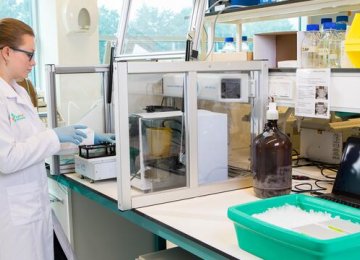
Building a single-cell cancer atlas
Single Cell Discoveries’ CEO Mauro Muraro explains the role of his company in PERSIST-SEQ. ‘We offer the consortium one centralized place where all samples are processed and data is generated.’
-
PERSIST-SEQ: International Research Consortium Aims to Build a Reproducible Single-cell Sequencing Workflow to Capture Tumour Persistence
PERSIST-SEQ has formed a coalition of field-leading researchers and medical oncologists on cancer resistance who will leverage their ingenious cancer modelling approaches and cutting-edge techniques to perform the sequencing of single tumour cells. PERSIST-SEQ will refine and standardise a broadly applicable workflow for single-cell sequencing in order to improve the understanding of therapeutic resistance in cancer and develop targeted prevention and mitigation techniques.