

Projects
Phosphodiesterase Inhibitors for Neglected Parasitic Diseases PDE4NPD
Lead identification and optimization, to develop novel drugs for neglected diseases

The PDE4NPD consortium aims to develop novel treatments for neglected parasitic diseases (NPDs), with a specific focus on four diseases that significantly contribute to the NPD medical burden: sleeping sickness, leishmaniasis, Chagas disease, and schistosomiasis. The consortium brings together experts from throughout the world, from academia and from small and medium-sized enterprises (SMEs).

€7.6 M
Funding: European Commission FP7

10
partners European, African & South American
About PDE4NPD
The Phosphodiesterase Inhibitors for Neglected Parasitic Diseases (PDE4NPD) drug discovery platform specifically targets parasitic phosphodiesterases (PDEs), enzymes that were previously shown to be essential for parasite survival. Phosphodiesterases (PDEs) make good drug targets because most of them have a unique architecture at the active site. Human PDEs have been widely studied as drug targets, and the experience and technologies from those studies are employed by the consortium to identify PDE inhibitors that specifically target parasite PDEs.
The program was operational early 2014 and covers the full range of activities from hit identification to lead optimization for clinical use.
Managing a worldwide consortium
TI Pharma – now part of Lygature – helped to drive project success from the beginning, managing the worldwide consortium of 10 partners. From January 2016, a broad range of resources and support are provided under the Lygature brand and include:
- Program management and leadership. Lygature is responsible for management of the program office where organizational aspects of the program as a whole are coordinated. In addition, Lygature coordinates the consortium meetings and all communication and dissemination efforts, both within the project and to the outside world.
- Coordination of sustainability discussions. Lygature coordinates development of an Open Innovation Platform that will assure sustainability and data sharing.
- Communications. Other contributions include brand building of PDE4NPD from the ground up; communicating project results and disseminating (scientific) articles; and providing a custom-built secure communications platform for internal use.
The worldwide PDE4NPD consortium has required extensive expertise in both management and communication. It is an important example of the Lygature mission to bring together partners with complementary areas of expertise to jointly fight neglected diseases.
Lygature together with
Fraunhofer IME-Hamburg-Germany, Instituto Oswaldo Cruz-Rio de Janeiro-Brazil, IOTA Pharmaceuticals, Cambridge-United Kingdom, The Spanish National Research Council-Madrid-Spain, Theodor Bilharz Research Institute-Imababa-Egypt, University of Antwerp-Antwerp-Belgium, University of Glasgow-Glasgow-United Kingdom, University of Kent-Kent-United Kingdom, VU University-Amsterdam-The Netherlands.
Project updates
-

PDE Toolbox plays a central role in parasite drug discovery and PDE biology
Last March, the PDE4NPD project submitted a very important deliverable: the PDE toolbox. The toolbox is a physical and virtual database with reference PDE inhibitors, DNA expression plasmids, and protocols. The project is currently halfway along, but already the PDE Toolbox is playing a central role both in parasite drug discovery and PDE biology.
-

Four NTD consortia from the FP7 HEALTH call gather at a Synergy Meeting
On June 15 and 16, the four consortia from the FP7 HEALTCH call on neglected tropical diseases will gather at a Synergy Meeting in Modena (Italy). The four consortia are: Antiparasitic Drug Discovery in Epigenetics (AParaDDisE), Kinetoplastid Drug Development Consortium (KinDreD), New Medicines for Trypanosomatidic Infections (NMTrypI) and PDE4NPD.
-
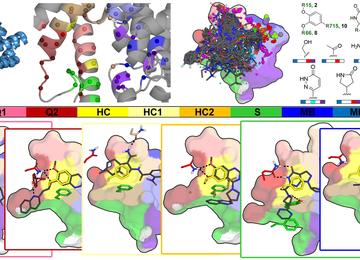
PDE4NPD applies drug discovery resource to study PDE enzymes in 3D
Medicinal chemists from the VU Amsterdam have constructed a publicly available, online structural chemogenomics database, PDEStrIAn, to analyse phosphodiesterase-inhibitor interactions in 3D. The structure-based medicinal chemistry toolbox is currently applied in the discovery and design of drugs against neglected tropical diseases by the PDE4NPD consortium.