

Projects
BBMRI.nl
Making biosamples, images and data findable, accessible and usable for health research.
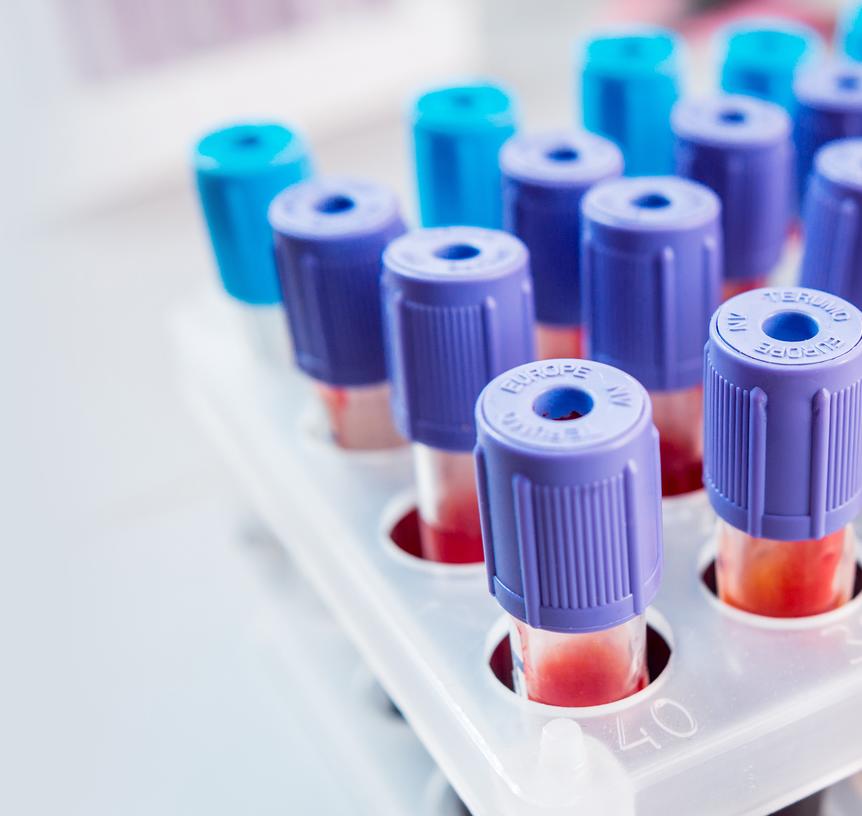

As part of the BBMRI-ERIC® consortium, BBMRI.nl is building and implementing the Dutch National Biobank Infrastructure. It collects, manages and makes accessible both the samples and the data and images needed for personalized medicine & health research. BBMRI.nl enables global (re)-use of resources.

20
partners from the Netherlands

€ 12.5 M
funding from NWO

About BBMRI.nl
BBMRI.nl aims to maximize the use of biosamples, images and data for health research on the prevention, diagnosis and treatment of disease in The Netherlands. In order to do so, BBMRI.nl provides: 1) access to biosamples, images and data, 2) tools to capture, integrate and analyse data, and 3) support on ethical, legal and societal implications. This is done with active participation of donors, citizens and patientsBBMRI.nl ensures that all developed resources are available in a Findable, Accessible, Interoperable and Reusable (FAIR) way.
BBMRI.nl is the Dutch National Node of BBMRI-ERIC: a European research infrastructure for biobanking that brings together the main players of the biobanking field - researchers, biobankers, industry, and patients - to boost biomedical research.
Visit the BBMRI.nl website for more information.
Ensuring operational excellence and providing data expertise
Six integrative Work Packages within BBMRI.nl each serve one or more parts of the strategy. Lygature was appointed to lead WP1 and to contribute to three, namely WP4, WP5 and WP6.
On behalf of Lygature, Tieneke Schaaij-Visser represents one of the WP-leaders managing the organisation, finances, communication, and collaborative activities within WP1 for BBMRI.nl. Lygature was granted this responsibility because of its experience with complex projects and its proven ability to manage the broader requirements of research, ranging from communications to legal issues. Lygature takes action in the following areas within BBMRI.nl:
- Program management. Lygature handles day-to-day operations including administrative and financial roles. It is responsible for all communications, and assists the SEC in coordinating, managing and monitoring the program on a day-to-day basis.
- Enabler of the biobank infrastructure. Lygature brings together the experts who build and implement the Dutch National Biobank Infrastructure. Aligning these processes allows for linkage of biobanks and clinical registries with the aim to promote secondary use of available samples and data for scientific research. Optimized tools are the request portal Podium and the Catalogue for sample and data collections.
- IT Infrastructure, support and access. Expertise acquired during the TraIT project has been pivotal in addressing data management, using proven solutions for multi-site data sharing and analysis.
- Facilitation of the Patient and Public Advisory Council (PPAC; Maatschappelijke Adviesraad Biobankonderzoek). The PPAC ensures the roles, interests, concerns and needs of patients and the pubic in biobank research and advices regarding its ethical and public aspects. Lygature actively enables the work of the PPAC by organizing its meetings, providing secretarial services, and promoting its work.
- Communications. Lygature disseminates information to internal project partners and externally - to the wider research community and general public. This includes maintenance of and posting on the project website, creating and mailing of newsletters and overall PR. Regular meetings with all WP leaders help to ensure the proper coordination of the project and that Lygature communicates efficiently in order to address emerging issues.
- Health-RI. Health-RI is the Dutch national initiative aiming to facilitate and stimulate an integrated health data infrastructure accessible for researchers, citizens and care providers. BBMRI.nl is one of its initiators, and Lygature is participating in its development.
Lygature’s role within BBMRI.nl demonstrates the wide range of different skills on offer to academics and commercial organizations. The project demands expertise in operational management, data management, regulatory issues, societal engagement, finance, and science. Importantly, Lygature is also playing an active ongoing role in promoting further improvements of research infrastructure.
Lygature together with

Amsterdam UMC, Erasmus Medical Center, Leiden University Medical Center, Maastricht University Medical Center+, Radboud University Medical Center, University Medical Center Utrecht, University Medical Center Groningen , Netherlands Cancer Institute, VU University Amsterdam, Parelsnoer, PALGA, Netherlands Heart Institute, SURFsara, Dutch Techcentre for Life Sciences, Legal Pathways, The Hyve, University of Groningen, Molgenis
Project updates
-

Why am I shorter than you?
The GIANT study, which was conducted in cooperation with BBMRI-NL, focused on DNA changes that alter the structure of proteins. And found rare, but influential, genetic changes related to height.
-
New statistical method that helps improve reproducibility of omics research
The scientific publication output from the BBMRI-NL 2.0 project is growing. On January 27, an article (van Iterson et al, 2017) was published in Genome Biology describing a novel Bayesian method to detect and correct for bias and inflation in epigenome- and transcriptome-wide association studies. The method has the crucial characteristic that it is largely independent of the fraction of true associations in the data. It outperforms existing methods by taking advantage of prior knowledge of the distribution and the composition of test statistics.
Current practice is bound to introduce false positive findings. The newly developed method provides a realistic estimate of inflation that does not suffer from a high variability. Moreover, it is the first method to address the previously unrecognized issue of bias in test statistics and optimally reduces the number of false positive findings while preserving statistical power. It can be seamlessly incorporated into existing work-flows for the analysis of EWAS, TWAS, and other omics data.
The method is developed within the framework of BBMRI-NL 2.0, which aims to develop a research infrastructure that can help understand the pathway from genes to disease development.
Implementation
Do you want to start working with the new statistical method? It is implemented as Bioconductor package, called BACON. Link to package: https://bioconductor.org/packages/release/bioc/html/bacon.html. -
XNAT - a big step forward for population imaging
From: BBMRI-NL Newsletter December 2016
Professor Aad van der Lugt is radiologist with a focus on Neuroradiology and Head-Neck radiology at the Erasmus MC. He spends a lot of his time doing research with imaging data. Van der Lugt uses and promotes XNAT, that was implemented and provided by TraIT, part of BBMRI-NL 2.0.
What is your experience with BBMRI-NL?
For years I have been involved in large cohort studies that use imaging data, such as the Rotterdam Study or Generation R study. We call this population imaging: imaging not used for diagnostics, but as a measuring instrument in scientific research. I got to know BBMRI-NL 2.0 because this project aims to build a national infrastructure for biobanking. In the past this infrastructure focused on biomaterials, blood and clinical data. However, the last 10 years and especially under BBMRI-NL 2.0 (including TraIT) there has been growing attention for imaging data and image analysis.What is XNAT?
XNAT is an open-source database for medical images. Normally imaging data is stored into archive systems of hospitals. To use these data for scientific research asks for a completely different way of storage. Data needs to be anonymous, easily accessible for researchers and shareable. The classical archives of hospitals do not meet these requirements. Within BBRMI-NL 2.0, TraIT implemented an open-source database, called XNAT (which was developed by Washington University, St Louis), and made it available for all Dutch researchers. XNAT within BBMRI 2.0 functions as an overarching multicentre database to which all research centres can be connected.How does XNAT work?
A request for use can be submitted via the service desk. Within a week you can be up and running. Investigators from research centres can send anonymized imaging data to the XNAT database, and can make the images accessible to other researchers. A big step forward, as in the past images were only available and accessible within the centre where they were stored. With XNAT the data is safely stored and the principal investigator that collected the data remains the owner. Researchers that want to use the XNAT data apply for access from the principal investigator via the XNAT system. Once access has been granted they can download the data from the cloud.Why do we need XNAT?
There is a growing call upon researchers to save their data for future research and to make it available for others. XNAT offers the infrastructure to do so. It facilitates the image analysis by automated pipelines and is a structured way to safely store anonymized data and make it available for other researchers. Next to that XNAT has proven to be very useful for multicentre studies. All centres can directly upload their images. Access rights are based on prior agreements and regulations. In the past the data were stored in one of the centres, which could be a barrier to access and a source of frustration among the other participants in the study.Is the XNAT tool a success?
We see that XNAT is used more and more, and we see that it works efficiently. We are now in the phase where we have images from multiple studies in the database The number of requests for data are growing and the data is actively used. We also see that research centres further develop and customize the database. This proves that XNAT fulfils the needs and wishes of researchers.What makes this tool unique?
XNAT is not only an imaging data infrastructure solution. What makes XNAT unique, is that it is developed and maintained by an active community to which researchers can contribute. It has become popular because it is open-source. This not only means that it is free, but it can be further developed by the users. Scientists do not like instant solutions, they want to think along and build it towards their own wishes and needs. With XNAT they can do so.What will be the future steps?
TraIT has made this imaging database available. Within BBMRI-NL 2.0 there are several storage solutions for other types of non-imaging data. For the future we need to focus on making more connections and links between the different data infrastructures and use this in research practice.