

Projects
RADAR-AD
Collaborative research that explores the potential of mobile and digital technologies to improve the assessment of Alzheimer’s Disease

Latest project updates
- Welcome to the sixth issue of our e-newsletter
- Chris Roberts, member of the RADAR-AD Patient Advisory Board, and chair of the European Working Group of People with Dementia, speaks at a session on patient involvement
- RADAR-AD investigator speaks about digital biomarkers in personalized healthcare at the Luxembourg Center for Systems Biomedicine
The RADAR-AD project aims to develop new ways of monitoring the progression of early Alzheimer’s disease using wearable devices and smartphone technology. Such widely available devices can reveal a patient’s condition remotely, at previously unachievable levels of detail, in a continuous fashion. RADAR-AD is a project consortium of 16 partners that includes industrial and academic partners from Europe and the US.

7.4 M
funding from IMI, EFPIA

16
partners in Europe and the US

About RADAR-AD
RADAR-AD (Remote Assessment of Disease And Relapse – Alzheimer’s Disease) is jointly led by King’s College London and Janssen Pharmaceutica, with funding from the Innovative Medicines Initiative (IMI) and in-kind contributions from industrial partners.
It is RADAR-AD’s vision to radically improve the assessment of Alzheimer’s disease (AD) and the care for people living with Alzheimer’s. We aim to do so by exploring how mobile technologies – such as smart phones, wearables and home-based sensors – can be used to measure disability progression associated with AD.
These technologies allow us to sensitively measure cognitive and functional decline in people with AD. However, it is currently unclear how we can use this potential to improve AD assessment and care – which is exactly what we are trying find out.
In this project, we aim to investigate how mobile technologies can improve our understanding of AD. For example, these techniques might help to detect AD earlier in people with cognitive decline. Mobile technology also allows for a more personalized approach to AD treatment and care, so that people with this disease can live independently for longer. In addition, we also aim to identify “digital biomarkers” (electronic signals that give information about a person’s health status) for AD. This creates new perspectives for the development of treatments against this progressive and debilitating condition.
Lygature in RADAR-AD
Providing multi-disciplinary partnership management, communications, patient engagement and regulatory expertise
- Program management. Lygature is a member of the project’s Management Team. Together with partner Janssen, Lygature coordinates this large and multi-disciplinary program on a day-to-day basis. Activities include monitoring the effective execution of the work plan and its progress, creation and alignment of work processes, resource management and internal communication.
- Communication and Dissemination. Lygature leads the Communication and Dissemination work package in RADAR-AD. Lygature provides the backbone for knowledge sharing and is responsible for the design and development of the public website, as well as a visual identity for the project. Our goal is to raise public and scientific awareness of remote assessment of disease and relapse in early Alzheimer’s disease and to disseminate our results to the scientific community and the general public in the most efficient way. We do this through regular communication on our website, social media channels and public outreach on scientific and non-scientific events through targeted campaigns and presentations.
- Communication with regulatory authorities, patient associations, payers and ethics boards. The project is also exploring new territory regarding the rules, regulations, patient needs and ethical challenges associated with mobile technology and health. In RADAR-AD, we have the expertise on board to address these often complex conundrums. For example, the Dutch Medicines Evaluation Board brings their regulatory knowledge to the table, and Alzheimer Europe ensures that the patient voice is being heard. As Lygature, we contribute by functioning as an independent broker between these different stakeholders. We stimulate, organize, facilitate conversations between the consortium and external parties, such as regulators, patient associations, and ethics specialists.
The contribution made by Lygature to RADAR-AD is an example of how cross-disciplinary expertise built up during major projects can be applied in new areas.
Lygature together with

King’s College London, VU University Medical Centre, The Hyve, University of Oxford, Karolinska Institutet, College ter Beoordeling van Geneesmiddelen / Medical Evaluation Board, Fraunhofer Institute for Algorithms and Scientific Computing, Alzheimer Europe, Janssen Pharmaceutica NV, Takeda Development Centre Europe Ltd, Novartis Pharma AG, Eli Lilly, Software AG, Centre for Research and Technology Hellas, Altoida AG


Acknowledgement of support
RADAR-AD receives funding from the Innovative Medicines Initiative 2 Joint Undertaking under grant agreement No 806999. This Joint Undertaking receives support from the European Union’s Horizon 2020 research and innovation programme and EFPIA. See www.imi.europa.eu for more details.
Project updates
-

Welcome to the sixth issue of our e-newsletter
Read the newsletter here.
-
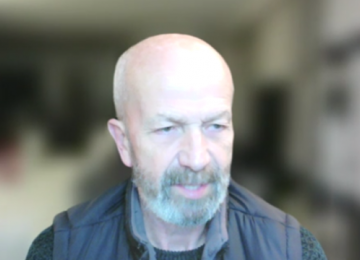
Chris Roberts, member of the RADAR-AD Patient Advisory Board, and chair of the European Working Group of People with Dementia, speaks at a session on patient involvement
On the 12th and 13th of December 2022, the European Federation of Pharmaceutical Industries and Associations (EFPIA) organised an online workshop entitled “Enhancing patient-centric outcome measures and clinical trials with Digital Health Technologies”. This was a multi-stakeholder event where participants were able to discuss requirements for Digital Health Technologies (DHT) in clinical trials, including the development of digital endpoints. Chris Roberts, member of the RADAR-AD Patient Advisory Board, shared his experience of and vision for patient involvement in dementia research.
-

RADAR-AD investigator speaks about digital biomarkers in personalized healthcare at the Luxembourg Center for Systems Biomedicine
Last week Prof. Dr. Holger Froehlich (Fraunhofer SCAI), leading RADAR-AD’s work stream on functional domains and modelling, gave a talk on the project at the Luxembourg Centre for Systems Biomedicine (LCSB). Dr. Froehlich presented his work on RADAR-AD and talked about the potential of digital devices and sensor technologies to enable objective and continuous monitoring of disease symptoms.